
Shaving technology has evolved significantly over the past century. One of the biggest developments in modern grooming has been the rise of multi-blade razors. Razor companies frequently promote higher blade counts as the key to achieving the smoothest and closest shave possible. As a result, many consumers assume that more blades automatically mean better shaving performance.
However, the relationship between blade count and shaving quality is more complex than marketing slogans suggest. In reality, the number of blades in a razor affects friction, skin irritation, hair cutting efficiency, and even the likelihood of ingrown hairs. Some dermatologists and shaving experts argue that fewer blades may actually be better for many people, especially those with sensitive skin.
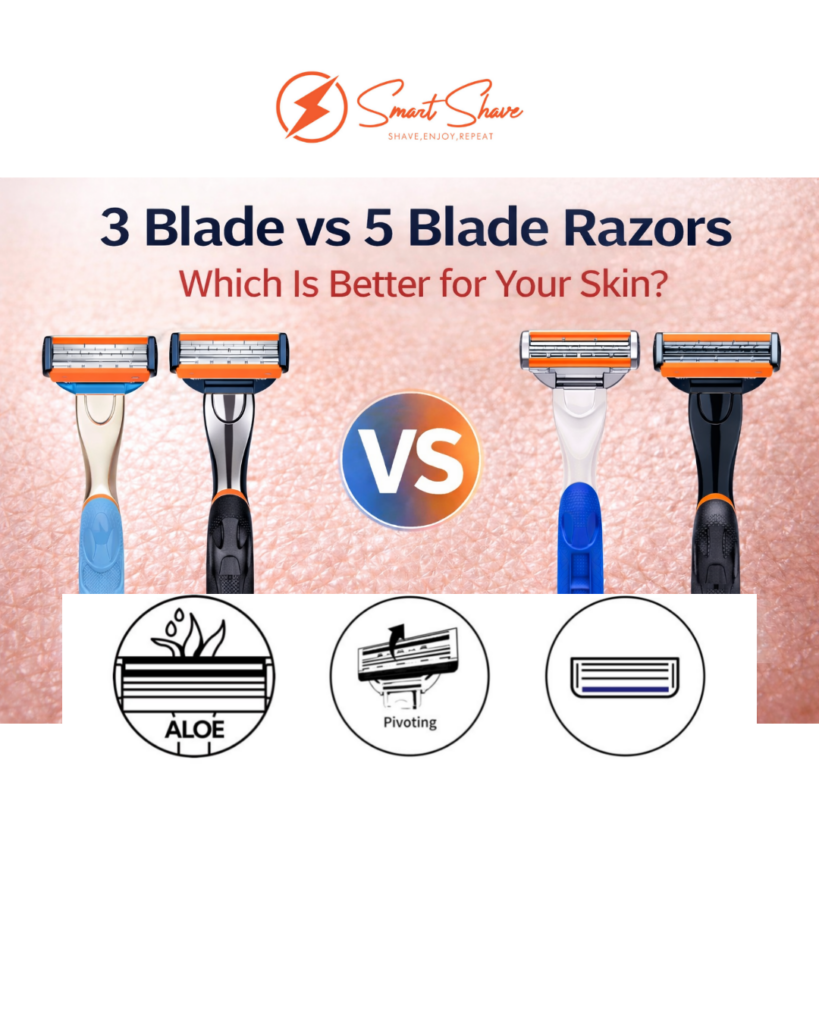
This guide explores the differences between 3 blade vs 5 blade razors, how they work, the science behind multi-blade shaving, and which option may be better depending on your skin type and beard thickness.
Understanding How Razor Blades Cut Hair
To understand the differences between three-blade and five-blade razors, it helps to first understand how razor blades cut hair.
Human hair is stronger than many people realise. Research conducted by engineers at the Massachusetts Institute of Technology discovered that hair can actually cause microscopic cracks in steel razor blades during shaving. Over time, these cracks spread along the blade edge and reduce its sharpness, which explains why blades become dull even though hair itself is relatively soft compared to steel.
Each razor blade cuts hair using a slicing motion rather than pressing straight down. When the blade moves across the skin, it meets the hair at an angle and slices through it near the surface of the skin.
Multi-blade razors use a concept commonly referred to as “lift and cut.” In this system, the first blade pulls the hair slightly upward while the following blades cut the hair progressively closer to the skin surface. This design is intended to create an extremely smooth result after shaving.
However, the presence of multiple blades also means the skin experiences repeated contact with metal edges in a single stroke.
What Is a 3 Blade Razor?
A three-blade razor is one of the most common cartridge razor designs. It contains three closely spaced blades within a single cartridge head.
This configuration aims to balance cutting efficiency with skin comfort. With three blades working together, the razor can remove hair effectively while minimizing the number of passes required.
Three-blade systems often include additional features such as:
- Lubrication strips
- Flexible pivoting heads
- Rubber skin guards
- Ergonomic handles
Because the blade count is moderate, these razors tend to produce less friction than higher blade counts while still providing a close shave.
What Is a 5 Blade Razor?
Five-blade razors are designed to deliver extremely close shaves by increasing the number of blades in contact with the skin.
Each blade cuts hair slightly lower than the previous blade. The goal is to reduce the amount of stubble remaining after a single pass.
These razors typically include:
- Five ultra-thin blades
- Precision trimmers on the back of the cartridge
- Lubrication strips
- Flexible cartridge heads
Because more blades are packed into the cartridge, the spacing between them is smaller. This design increases the total blade contact area during shaving.
Key Differences Between 3 Blade and 5 Blade Razors
Although both razor types perform the same basic function, their shaving characteristics can differ in several important ways.
1. Skin Friction
One of the most significant differences between blade counts is friction.
Every blade that passes across the skin removes hair but also creates a small amount of surface friction. When multiple blades move across the same patch of skin, that friction increases.
A five-blade razor therefore produces more skin contact than a three-blade razor during each stroke.
Dermatology research suggests that repeated blade passes can increase irritation, particularly for individuals with sensitive skin or conditions such as razor bumps.
2. Closeness of Shave
Five-blade razors are often marketed as providing the closest shave. Because more blades are involved, the hair can be cut extremely close to the skin surface.
For some users, this produces a smoother finish immediately after shaving.
However, extremely close shaving can sometimes increase the risk of ingrown hairs, especially for individuals with curly or coarse facial hair.
Three-blade razors typically produce a very close shave while leaving a tiny bit more length above the skin surface. This may reduce the likelihood of ingrown hairs in certain individuals.
3. Skin Irritation
Skin irritation is influenced by several factors including blade sharpness, lubrication, shaving technique, and blade count.
Because five blades pass across the skin during each stroke, they may increase irritation for people with sensitive skin.
Three-blade systems often strike a balance between effective cutting and reduced friction.
4. Blade Maintenance
Five-blade cartridges often clog more easily than three-blade cartridges. The narrow spacing between blades can trap hair, shaving cream, and skin debris.
When this happens, rinsing the razor becomes more difficult and shaving efficiency decreases.
Three-blade cartridges usually have wider spacing between blades, making them easier to rinse during shaving.
The Dermatology Perspective on Blade Count
Some dermatologists have raised concerns about high blade counts in razors.
According to experts in skin care and grooming, more blades can increase the risk of certain shaving problems such as:
- Razor burn
- Skin irritation
- Ingrown hairs
When multiple blades pass across the skin in quick succession, they remove not only hair but also small amounts of the outer skin layer. This process is similar to exfoliation.
While mild exfoliation can be beneficial, excessive exfoliation from repeated blade contact may weaken the skin barrier and increase sensitivity.
Dermatology sources frequently recommend choosing a razor that minimizes unnecessary friction while still cutting hair effectively.
Which Razor Is Better for Sensitive Skin?
Sensitive skin requires careful shaving techniques and appropriate tools.
People with sensitive skin often experience:
- redness
- razor burn
- itching
- irritation
For these individuals, reducing friction during shaving is extremely important.
Three-blade razors may be more suitable for sensitive skin because they involve fewer blade passes during each stroke.
The presence of fewer blades means less scraping across the skin surface.
Using proper lubrication and gentle shaving techniques further reduces irritation.
Which Razor Is Better for Thick or Coarse Hair?
Men with thick facial hair often prefer razors that cut hair efficiently with minimal tugging.
Five-blade razors can sometimes perform well in this situation because the extra blades reduce the amount of hair left after each pass.
However, shaving preparation is equally important. Proper hydration softens hair and allows any razor to perform more efficiently.
Warm water, shaving cream, and gentle strokes can significantly improve shaving results regardless of blade count.
The Role of Lubrication Strips
Many modern cartridge razors include lubrication strips designed to improve glide and reduce friction.
These strips typically contain moisturizing ingredients such as aloe vera or vitamin E.
When activated by water, the lubrication strip releases a thin layer of gel that helps the razor glide more smoothly across the skin.
This feature can help reduce irritation during shaving.
How Shaving Technique Matters More Than Blade Count
Although blade count influences shaving performance, technique often plays an even bigger role.
Common shaving mistakes include:
- pressing too hard
- shaving against the grain
- using dull blades
- skipping shaving cream
Proper shaving technique involves:
- Washing the face with warm water
- Applying shaving cream or gel
- Using light pressure
- Shaving in the direction of hair growth
- Rinsing the blade frequently
Following these steps helps protect the skin regardless of the razor type used.
Environmental Impact of Razor Systems
Razor waste has become an environmental concern in recent years.
Disposable razors and cartridge heads contribute to plastic waste because they combine plastic housing with metal blades.
Although both three-blade and five-blade cartridges produce waste, using longer-lasting cartridges and replacing them less frequently can help reduce environmental impact.
Some shaving brands are also exploring recycling initiatives for used razor cartridges.
Cost Differences Between Blade Types
Another factor influencing razor choice is cost.
Five-blade cartridges often cost more than three-blade cartridges because they require more materials and complex manufacturing processes.
For consumers who shave frequently, the cost difference can add up over time.
Choosing a razor system that balances performance and affordability can reduce long-term grooming expenses.
So Which Razor Is Actually Better?
The answer depends largely on personal preferences, skin type, and beard characteristics.
Three-blade razors may be better for:
- sensitive skin
- people prone to razor burn
- those who prefer less friction
Five-blade razors may be better for:
- extremely coarse facial hair
- individuals seeking ultra-close shaves
- people who shave less frequently but want smooth results
Ultimately, the best razor is the one that provides a comfortable shave without irritation.
Final Thoughts
The debate between 3 blade vs 5 blade razors often focuses on marketing claims rather than real shaving science. While more blades can sometimes produce a slightly closer shave, they also increase friction and skin contact.
For many people, a three-blade razor provides an ideal balance between closeness, comfort, and reduced irritation. Others may prefer the ultra-close finish produced by five-blade systems.
Understanding how razor blades interact with hair and skin can help you make better grooming decisions. By choosing the right razor, preparing your skin properly, and using good shaving technique, you can achieve smoother results with fewer shaving problems.
In the end, shaving comfort matters more than blade count alone.