
Razor blades are a small but vital component in any shave. While most men focus on the handle, the brand name, or the packaging, the number of blades in your cartridge has a direct impact on skin comfort, closeness, irritation levels, and long-term cost. One of the most common grooming questions in the UK is simple: are 3-blade razors better than 5-blade razors — and which one should you actually use?
For years, razor companies pushed the idea that more blades automatically meant a better shave. First it was two blades. Then three. Then five. Some brands even experimented with six or more. But does increasing blade count really improve performance — or does it create more problems than it solves?
If you’re deciding between a 3-blade vs 5-blade razor, this guide breaks down the science, the skin impact, the cost differences, and which option works best for different shaving needs.

Why Blade Count Matters More Than You Think
Each blade in a cartridge makes contact with your skin. That contact creates friction. Friction creates heat and micro-exfoliation. Micro-exfoliation, when excessive, leads to irritation.
A 3-blade razor means three points of contact.
A 5-blade razor means five.
That difference may sound small, but it changes how your skin reacts — especially if you shave frequently or have sensitive skin.
The purpose of multiple blades is to lift and cut hair progressively. The first blade pulls slightly, the second cuts lower, and each additional blade trims closer to the skin surface. This is known as the “lift and cut” effect.
While this can produce an extremely close shave, it can also increase:
- Razor burn
- Ingrown hairs
- Skin dryness
- Redness
- Long-term sensitivity
So the real question becomes: do you want the closest possible shave, or the healthiest skin over time?
How 3-Blade Razors Work
A 3-blade razor is designed to balance closeness and comfort. It removes hair efficiently while limiting excessive friction. Because fewer blades drag across the skin, there is less cumulative stress per stroke.
This is why many dermatologists recommend fewer blades for men with sensitive skin or prone to razor bumps.
Benefits of a 3-blade razor:
It reduces friction compared to 5-blade systems.
It lowers the risk of ingrown hairs.
It is often better for daily shaving.
It creates less blade clogging.
It typically costs less per cartridge.
Because there are fewer blades, the spacing between them is often wider. That makes rinsing easier and prevents hair buildup — especially important if you shave thicker hair or multiple times per week.
For men in the UK dealing with hard water — which already increases skin dryness — reducing blade friction becomes even more important.
How 5-Blade Razors Work
5-blade razors are engineered to provide maximum closeness. Each blade trims slightly below the previous one, aiming to cut hair as close to the skin as possible.
For some men, especially those shaving every few days, this ultra-close shave feels smoother immediately after.
However, five blades also mean:
More skin contact
More potential irritation
More surface scraping
Greater chance of hair being cut below skin level
When hair is cut too low, it increases the likelihood of it curling back into the follicle — leading to ingrown hairs and razor bumps.
Men with thick, curly, or coarse hair often find that 5-blade razors increase irritation over time.
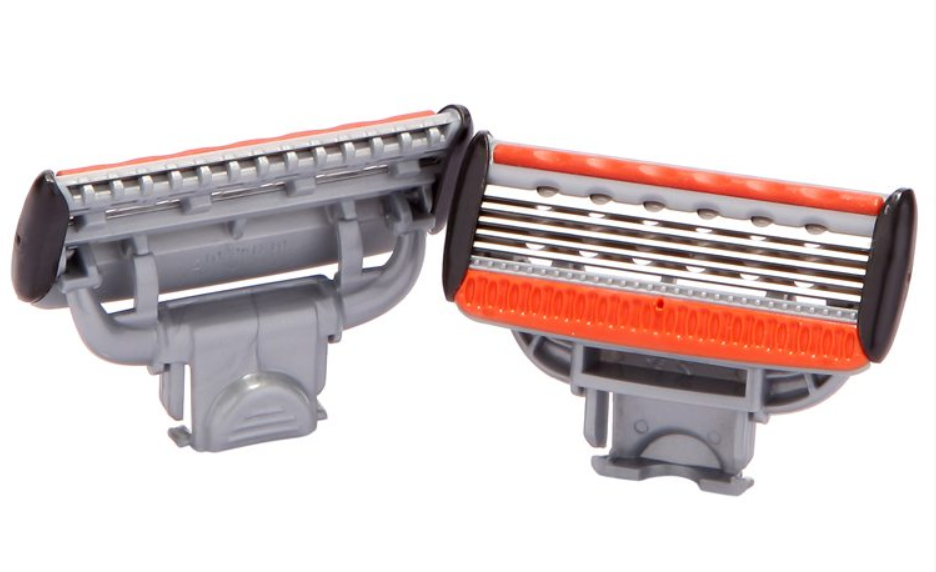
3-Blade vs 5-Blade Razors: Key Differences
Closeness
5 blades may feel slightly smoother immediately after shaving. However, the difference often disappears within 24 hours as hair regrows.
Skin Comfort
3 blades generally cause less irritation, especially for daily shavers.
Ingrown Hair Risk
5 blades increase the chance of cutting hair below skin level. 3 blades are usually safer for men prone to razor bumps.
Cost
5-blade cartridges are almost always more expensive. Over 5–10 years, this cost difference adds up significantly.
Maintenance
3-blade razors rinse cleaner and clog less easily.
Daily Shaving
If you shave every day for work or preference, 3 blades are typically better for maintaining skin health.
Which Razor Is Best for Sensitive Skin?
If you struggle with redness, stinging, tightness, or post-shave irritation, a 3-blade razor is usually the better option.
Sensitive skin reacts not just to sharpness but to repeated scraping. Five blades scraping across the same patch of skin increases micro-damage. Over time, that weakens the skin barrier.
Reducing blade count reduces cumulative trauma.
For men with eczema-prone skin, razor burn issues, or recurring ingrown hairs, switching from 5 blades to 3 often makes a noticeable difference within weeks.
Is a 5-Blade Razor Ever Better?
Yes — but only in certain cases.
If you:
- Shave once or twice per week
- Have straight, fine hair
- Want the absolute closest finish for special occasions
- Don’t suffer from irritation
Then a 5-blade razor may work well for you.
However, even in those cases, technique matters more than blade count. Light pressure and proper lubrication are essential.