
Most guys grab a razor and start shaving without a second thought. Yet every year, over 70 percent of men experience skin irritation or infections caused by poor razor care. Surprisingly, what really wrecks your shave is not just the blade itself but how you handle and protect your razor between uses. The simple habits you skip after shaving can actually make all the difference for your skin and your razor’s lifespan.
Table of Contents
Quick Summary
| Takeaway | Explanation |
| Keep your razor clean after each use | Rinse your razor under hot water to remove buildup and maintain sharpness, preventing skin irritation and infections. |
| Store your razor properly to avoid moisture | Place your razor in a dry, well-ventilated area to prevent corrosion and prolong blade life. |
| Replace blades regularly for optimal performance | Change your razor blades every 5-7 shaves to avoid skin irritation and maintain a smooth shave. |
| Dry your razor thoroughly to prevent rust | Shake off excess water and use a towel to dry your razor, which prevents rust and maintains sharpness. |
| Invest in quality razors for better results | High-quality razors offer better performance and durability, reducing long-term grooming costs and enhancing the shaving experience. |
1: Keep Your Razor Clean After Each Use
Maintaining razor hygiene is a fundamental aspect of razor maintenance that many men overlook. Every time you shave, microscopic hair, skin cells, shaving cream, and bacteria accumulate on your razor blades, creating an ideal environment for potential infections and blade deterioration.
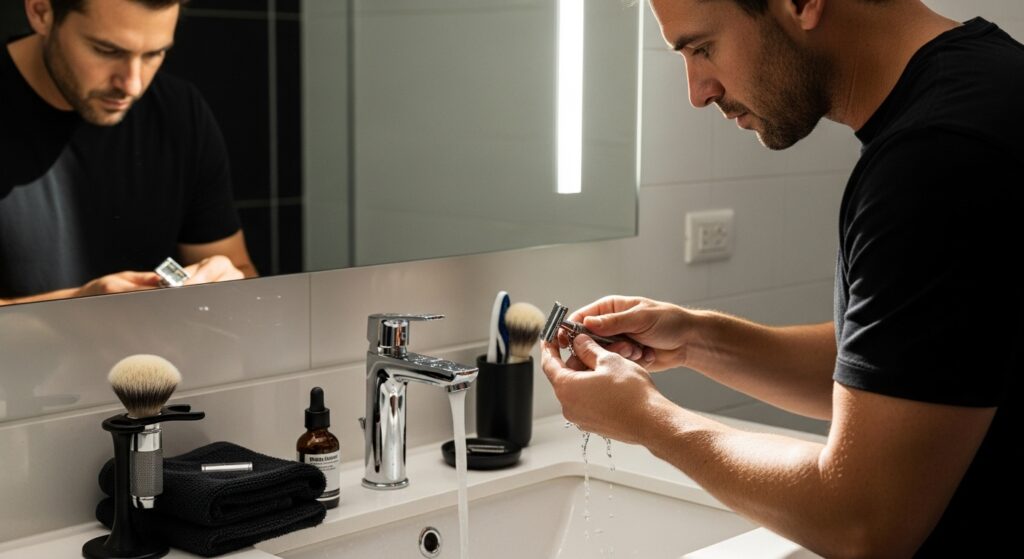
After each shaving session, thoroughly rinse your razor under hot running water, ensuring you remove all debris from between the blades. This simple practice prevents buildup and helps maintain blade sharpness. Angle the razor to let water flow directly through the blade area, dislodging trapped hair and residue.
To further enhance cleaning, consider these strategic steps:
-
Tap the razor gently against the sink to remove excess water
-
Store your razor in a dry, well-ventilated area away from moisture
-
Use a soft brush or cloth to remove stubborn residue if necessary
According to Mayo Clinic’s dermatology research, improper razor maintenance can lead to skin irritation and potential bacterial growth. Regular cleaning not only extends your razor’s lifespan but also protects your skin from potential infections.
For men who want to explore more about blade maintenance, understanding proper cleaning techniques is crucial. A well-maintained razor provides a smoother, more comfortable shave and reduces the risk of skin problems like razor burn or ingrown hairs.
Remember, consistent cleaning is key. Make it a habit to rinse and dry your razor immediately after use, and you’ll significantly improve its performance and longevity.
2: Store Your Razor Properly to Prevent Damage
Proper razor storage is a critical yet often overlooked aspect of razor maintenance that directly impacts your shaving experience and tool longevity. Where and how you store your razor can significantly influence its performance, sharpness, and overall condition.
Moisture is your razor’s primary enemy. After each use, find a location that is dry, well-ventilated, and away from direct bathroom humidity. Storing your razor in damp environments like shower ledges or near sink basins accelerates metal corrosion and dulls blade edges faster.
Consider these strategic storage recommendations:
-
Keep your razor in an upright position to allow complete air drying
-
Use a razor stand or holder that provides adequate air circulation
-
Avoid storing razors inside closed cabinets with high humidity
-
Place a small silica gel packet near your razor to absorb excess moisture
According to American Academy of Dermatology, proper razor storage helps prevent bacterial growth and maintains blade integrity. Metal blades are particularly susceptible to oxidation when exposed to consistent moisture.
Explore our guide on razor blade maintenance to understand more about protecting your shaving tools. Temperature and humidity control are paramount in extending your razor’s operational life.
Invest in a quality razor stand or holder that allows complete air circulation. Some modern stands even include antimicrobial properties that further protect your razor from potential bacterial contamination. By implementing these storage strategies, you’ll significantly extend your razor’s usability and maintain its cutting performance.
3:Replace Blades Regularly for Optimal Performance
Maintaining razor blade performance is not just about cleaning and storing your razor correctly. Regular blade replacement is crucial for achieving a smooth, comfortable shave and preventing potential skin irritations.
Over time, razor blades accumulate microscopic damage, develop tiny nicks, and experience metal fatigue that compromises their cutting efficiency. These subtle changes might seem imperceptible, but they significantly impact your shaving experience.
The frequency of blade replacement depends on several key factors:
-
Shaving frequency (daily vs occasional)
-
Hair thickness and coarseness
-
Skin sensitivity
-
Blade quality and material
According to Harvard Health Publishing, using a dull blade increases the risk of skin irritation, razor burn, and potential infections. Sharp blades require less pressure, reducing the likelihood of cuts and skin damage.
Explore our comprehensive guide on blade replacement to understand optimal replacement intervals. Generally, most men should replace their razor blades every 5 to 7 shaves or approximately once every two weeks with daily use.
Watch for these signs indicating it’s time to replace your blade:
-
Increased skin irritation after shaving
-
Tugging or pulling sensation during shaving
-
Visible blade rust or discoloration
-
Blades feel less smooth compared to initial use
Investing in high-quality replacement blades and changing them regularly ensures a consistently smooth, comfortable shave while protecting your skin from potential complications.
4: Dry Your Razor Thoroughly to Avoid Rust
Moisture is the primary culprit behind razor blade deterioration, making thorough drying an essential step in razor maintenance. Rust and corrosion can quickly transform a premium razor into an ineffective and potentially dangerous shaving tool.
Immediate and comprehensive blade drying prevents metal oxidation and extends your razor’s functional lifespan. Water molecules left on razor blades create an environment conducive to rapid rust formation, which compromises blade sharpness and overall performance.
Effective drying techniques include:
-
Gently shake excess water off the razor after rinsing
-
Use a clean, soft towel to pat the razor dry
-
Store the razor in an upright position to allow air circulation
-
Consider using a hairdryer on low, cool setting for thorough drying
According to National Institutes of Health research, metal corrosion accelerates in humid environments, making post-shave drying crucial for maintaining razor integrity.
Learn more about protecting your shaving equipment to understand the intricate relationship between moisture management and razor longevity. Precision in drying can significantly extend your razor’s useful life.
Additionally, some advanced techniques can further protect your razor:
-
Apply a thin layer of mineral oil to create a moisture barrier
-
Use silica gel packets near your razor storage area
-
Invest in razor stands that promote air circulation
Consistent and meticulous drying transforms a simple maintenance routine into a proactive strategy for preserving your shaving investment. By implementing these techniques, you’ll ensure your razor remains sharp, rust-free, and ready for optimal performance.
5: Use Razor-Safe Products for Better Care
Product selection plays a critical role in razor maintenance and overall shaving experience. Not all grooming products are created equal, and using inappropriate substances can significantly damage your razor’s performance and longevity.
Chemical compositions in shaving creams, gels, and aftershave products directly interact with razor blades, potentially causing corrosion, dulling, or structural degradation. Understanding which products complement your razor’s material becomes essential for preserving its quality.
Key considerations for razor-safe product selection include:
-
Avoiding alcohol-based products that accelerate metal oxidation
-
Choosing pH-neutral formulations
-
Selecting products specifically designed for sensitive skin and premium razors
-
Checking ingredient lists for corrosive chemical compounds
According to Journal of Cosmetic Science, certain chemical interactions can dramatically reduce razor blade lifespan. Mineral oils and glycerin-based products tend to provide better protection for metal surfaces.
Explore our recommended shaving product guide to understand which formulations work best with high-quality razors. Investing in compatible products protects not just your razor, but also your skin.
Additional recommendations for razor-safe product usage:
-
Always rinse razor thoroughly after applying any product
-
Use lukewarm water to prevent potential chemical reactions
-
Consider using specialized razor maintenance sprays
-
Rotate between different product types to minimize consistent chemical exposure
By being deliberate about product selection, you transform basic maintenance into a strategic approach that preserves your razor’s performance and extends its operational life.
6: Sanitize Your Razor for Improved Hygiene
Razor sanitation is more than a cosmetic concern – it’s a critical health practice that prevents potential skin infections and bacterial growth. Your razor encounters multiple biological elements during each shave, including skin cells, hair, and microscopic bacteria that can rapidly multiply if not properly managed.
Regular sanitization eliminates harmful microorganisms and prevents cross-contamination, protecting both your skin and your shaving equipment. Bacterial buildup on razor blades can lead to potential skin irritations, infections, and compromised shaving performance.
Effective sanitization techniques include:
-
Soaking razor in rubbing alcohol for 1-2 minutes
-
Using UV sanitizing devices designed for grooming tools
-
Applying hydrogen peroxide solution
-
Utilizing specialized blade cleaning sprays
According to Centers for Disease Control and Prevention, proper equipment sanitization significantly reduces infection risks associated with personal grooming tools.
Learn more about maintaining skin health during shaving to understand the broader implications of razor hygiene. Comprehensive sanitization goes beyond surface cleaning.
Additional recommendations for thorough razor hygiene:
-
Clean razor immediately after each use
-
Allow razor to dry completely between uses
-
Replace razor blades regularly
-
Store razor in dry, clean environment
By integrating systematic sanitization into your grooming routine, you protect not just your razor, but your overall skin health. Consistent maintenance transforms your razor from a potential bacterial breeding ground into a clean, reliable grooming tool.
7: Invest in Quality Razors for Longer Lifespan
Selecting a premium razor is an investment in your personal grooming experience, not merely a purchasing decision. High-quality razors offer superior performance, durability, and long-term cost-effectiveness, transcending the typical disposable razor paradigm.
Quality razors distinguish themselves through precise engineering, superior material selection, and advanced design features that directly impact shaving comfort and blade longevity. Stainless steel blades, ergonomic handles, and advanced metallurgy contribute to a razor’s overall performance and maintenance potential.
Key characteristics of superior razors include:
-
Corrosion-resistant blade materials
-
Precision-engineered cutting edges
-
Ergonomic handle design for consistent blade angle
-
Advanced coating technologies
-
Robust construction that withstands repeated use
According to Consumer Reports research, investing in a high-quality razor can reduce long-term grooming expenses by minimizing frequent blade replacements and improving overall shaving experience.
Explore our comprehensive shaver reviews to understand the nuanced differences between various razor technologies. Premium razors represent a sophisticated approach to personal grooming.
Additional considerations for razor selection:
-
Assess your specific skin and hair type
-
Consider blade flexibility and movement
-
Evaluate handle grip and weight distribution
-
Review long-term maintenance requirements
By prioritizing quality over immediate cost savings, you transform razor maintenance from a routine task into a refined grooming strategy. A superior razor becomes more than a tool – it’s a personalized grooming companion designed to deliver consistent, comfortable results.
Below is a comprehensive table summarizing the seven essential razor maintenance tips for men, highlighting best practices, core benefits, and critical steps outlined throughout the article.
| Tip | Key Actions & Recommendations | Benefits for Users |
| Keep Razor Clean After Each Use | Rinse under hot water, remove debris, tap gently, use a brush if needed. | Prevents irritation, infections, and blade dulling. |
| Store Razor Properly | Store upright in a dry, well-ventilated area; use a stand or silica gel to absorb moisture. | Reduces corrosion, bacteria, and maintains sharpness. |
| Replace Blades Regularly | Change blades every 5-7 shaves; watch for signs of dullness or rust. | Ensures a smooth shave and protects skin from irritation and pulling. |
| Dry Razor Thoroughly | Shake off water, use a towel, air dry upright, consider a hairdryer or mineral oil barrier. | Prevents rust, prolongs blade life, keeps blades sharp. |
| Use Razor-Safe Products | Avoid alcohol/harsh chemicals; use pH-neutral, glycerin-based, or mineral oil products; rinse blades thoroughly after use. | Reduces corrosion, preserves blade quality, and benefits sensitive skin. |
| Sanitize Razor for Hygiene | Soak in rubbing alcohol or hydrogen peroxide, use UV sanitizers or cleaning sprays, clean and dry after every use. | Minimizes risk of skin infections and bacterial growth. |
| Invest in Quality Razors | Choose razors with stainless steel, ergonomic handles, advanced blades, and robust construction; consider grooming needs. | Offers better performance, long-term cost savings, and shaving comfort. |
Upgrade Your Shaving Routine with Hassle-Free Razor Maintenance
Are you tired of dealing with dull blades, constant irritation, and razors that need constant attention just to perform well? The tips you have just learned in our article address common frustrations like blade corrosion, poor hygiene, and the discomfort of shaving with worn-out equipment. We know how important blade sharpness, safe storage, and proper hygiene are for a comfortable and confident shave. But why keep struggling with the same challenges?
Discover more ways to streamline your personal care in our grooming section
Choose SmartShave.co.uk to make razor maintenance simple. Our flexible subscriptions deliver sharp, high-quality razors and replacement heads right to your door, so you never have to worry about blade dullness or sourcing the right products again. Explore more expert tips and premium grooming solutions in our shaving guide, then start your subscription with free UK shipping and exclusive offers. Experience the difference of consistent quality and care today.
Frequently Asked Questions
How can I properly clean my razor after each use?
To clean your razor, rinse it under hot running water to remove hair, skin cells, and shaving cream. Tap it gently against the sink to dislodge debris and ensure it dries completely in a well-ventilated area.
Why should I store my razor in a dry place?
Storing your razor in a dry place prevents moisture accumulation, which can lead to metal corrosion and dullness of the blades. Proper storage helps maintain blade integrity and prolongs the lifespan of your razor.
How often should I replace my razor blades for the best shave?
It’s recommended to replace your razor blades every 5 to 7 shaves or approximately once every two weeks with daily use. Signs of dull blades include increased skin irritation and a tugging sensation during shaving.
What products should I avoid using with my razor?
Avoid using alcohol-based products and harsh chemicals as they can cause metal oxidation and degrade the razor. Instead, opt for pH-neutral creams and products designed for sensitive skin that are compatible with your razor’s material.