
Razor cartridges have a reputation for being expensive a reality that many men in the UK feel each time they shop for replacement blades. For a product that seems so simple, the price tag often feels unusually high, especially compared with other grooming tools or even knives and scissors of similar function. Understanding why razor cartridges carry such a premium requires looking beyond the packaging and into the economics, marketing strategies, manufacturing realities, and consumer behaviours that shape this market. What becomes clear is that the high cost of replacement cartridges is not simply a reflection of how much they cost to make, but rather the result of a complex interplay of industry dynamics, brand positioning, and the psychology of shaving.
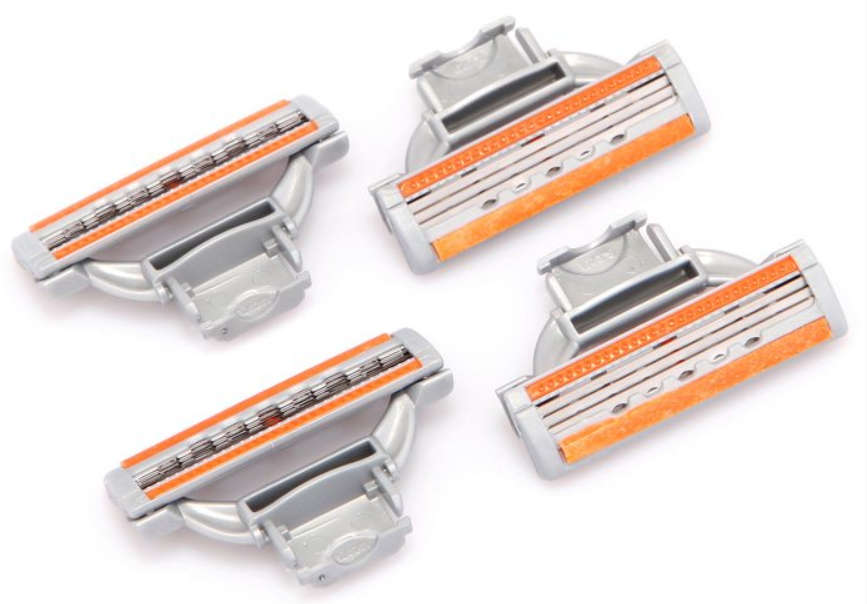
At the heart of the issue is the razor industry’s business model, which is fundamentally built around recurring revenue. Instead of generating profit from a single purchase, many major razor brands rely on customers buying cartridges over and over again throughout their lives. This is sometimes referred to as a “razor and blades” business model, where the razor handle acts as a loss leader or a low-margin purchase, and the replacement cartridges are where long-term profit is made. While this model is not unique to razors — printers and ink cartridges or coffee machines and pods operate the same way — it has significant implications for pricing. If a company depends on repeat purchases to make money, the pricing of cartridges becomes less about cost and more about maximizing lifetime value from each customer. This dynamic holds true in the UK as much as elsewhere.
Another major factor that contributes to high cartridge prices is the role of branding and perceived value. Razor companies invest heavily in marketing, sponsorships, and premium positioning to create an association between price and performance. When a razor brand sponsors major sports events, celebrity endorsements, and huge advertising campaigns, those costs don’t disappear. They get passed on to consumers through higher product prices. The idea is to create a perception that more expensive cartridges must be better — sharper, smoother, more advanced — even if the underlying technology has not dramatically changed in years. In the UK, where brand loyalty is strong and many men don’t closely compare alternatives, this perception can be particularly influential.
Retail markups also play a role in driving cartridge prices higher. Whether sold through traditional high-street stores, supermarkets, or online marketplaces, razor cartridges are often subject to significant retail markups. In physical stores, space is limited and competition for shelf placement is intense. Retailers charge higher prices to make up for the costs of stocking, display, and staffing. Even when cartridges are sold online, where pricing can theoretically be more competitive, algorithms and marketplace dynamics often keep prices high because consumers are used to seeing premium tags attached to reputable brands.
Manufacturing costs do factor into the price, but perhaps less than most consumers assume. High-quality razor blades are made from stainless steel or other engineered alloys and often receive special coatings to improve glide and corrosion resistance. However, the physical materials involved are not extraordinarily expensive when considered in isolation. What adds cost is the precision engineering, coatings, and quality controls required to make blades that feel smooth and consistent. Even so, manufacturing cost alone doesn’t typically justify the high price points seen on shelves — it’s the combination of manufacturing, branding, distribution, and recurring revenue strategy that does.
Research and development (R&D) is another frequently cited reason for high cartridge prices. Companies often claim that continual innovation — better ergonomics, more blades, enhanced pivot technology, improved lubrication strips, and so on — justifies premium pricing. While there is some truth to this, the actual pace of meaningful technological advancement in cartridge razors has slowed over the years. Many newer models simply repackage existing ideas with incremental tweaks rather than breakthrough improvements. This doesn’t mean R&D doesn’t cost anything, but it does mean that a large share of what you pay for is not solely attributable to engineering advancements. In many cases, the “innovation narrative” serves marketing more than performance.
Regulatory and compliance costs in markets like the UK and EU also influence pricing. Products must meet safety and material standards, which adds cost to design, testing, and certification. While these costs are necessary for consumer safety, they contribute to the overall price tag. In contrast, products that bypass stringent quality checks or ethical sourcing can be cheaper but may not deliver the same level of safety or performance assurance.
The psychological aspect of shaving behavior also contributes to why cartridges are expensive. Razor brands design products and subscription models that encourage frequent replacements. Even when a blade could still deliver a reasonable shave, packaging and advice often push consumers toward earlier replacement. Terms such as “dull,” “blunt,” or “less effective after X days” are used to create a sense of urgency. This psychological nudging sometimes bordering on fear-driven marketing prompts men to purchase replacements sooner than necessary, which in turn supports higher pricing structures.
Subscription models are another manifestation of this pricing paradigm. While shaving subscriptions are marketed as convenient and cost-effective, the reality is that many subscription plans lock consumers into payment cycles that are more profitable for the brand than for the customer. Missed cancellation windows, unused cartridges piling up, and fixed delivery schedules all contribute to a sense of losing control over cost. In the UK, where subscriptions are increasingly popular, this model contributes significantly to cartridge pricing dynamics.
Competition or the lack thereof also plays a role. While the razor market may seem crowded, a handful of dominant brands control the majority of shelf space and consumer mindshare. Smaller brands and alternatives exist, but many of them struggle to break through the perception that the well-known brands are inherently superior. This lack of meaningful differentiation allows dominant players to maintain premium pricing without losing market share. Consumers who might otherwise switch to lower-priced alternatives often stick with familiar names, reinforcing the cycle of high cartridge spend.
Retail pricing strategies add their own layer of complexity. Seasonal promotions, multi-buy discounts, and loyalty incentives can make cartridges seem more affordable at specific moments, but they also anchor consumers to inflated base prices. A “half-price” deal can still be far more expensive than an equivalent quality alternative that never had the inflated original price in the first place. These pricing tactics create an illusion of savings while keeping baseline cartridge costs high.
Currency fluctuations and import costs shouldn’t be overlooked either. The UK imports many razor blades and components, and changes in exchange rates, trade tariffs, and transportation costs influence pricing. When the pound weakens, import costs rise, and manufacturers or retailers often pass these increases on to consumers rather than absorbing them.
Environmental and ethical considerations are another increasingly relevant factor. Some premium brands have started to invest in more sustainable materials and ethical sourcing. While this is a positive move for the planet, it can also increase production costs. Sustainable materials, recyclable packaging, and ethical manufacturing practices are typically more expensive than traditional counterparts. However, many brands use sustainability as a marketing differentiator, charging premium prices that go well beyond the actual cost differential.
All of these factors combine to create a pricing environment where razor cartridges in the UK are disproportionately expensive compared with their cost of production and actual functional value. What many men don’t realise is that razor performance isn’t inherently tied to these inflated price points. Thoughtful design, smart engineering, and a focus on actual shaving comfort and blade longevity can deliver equal or better results at a lower long-term cost.
For example, well-designed three-blade cartridge systems with effective lubrication strips and quality materials can provide a smooth, comfortable shave without the premium pricing and unnecessary gimmicks. When men prioritise how a razor performs on the skin instead of how it’s marketed, they often find that more affordable options offer comparable — and sometimes superior — comfort. These systems avoid subscription lock-ins, reduce unnecessary replacements, and focus on delivering performance rather than just compelling branding.
Transitioning away from overpaying often starts with awareness. Recognising that premium pricing often reflects marketing budgets, distribution markups, and psychological hooks rather than pure performance allows men to make smarter shaving decisions. A well-chosen razor that balances quality, comfort, and cost can empower daily comfort without draining wallets over time.
Ultimately, razor cartridges are expensive in the UK not just because of production costs or engineering. The pricing reflects the intertwined effects of brand positioning, recurring revenue models, retail dynamics, marketing psychology, and the consumer’s willingness to accept premium pricing as equating to better quality. Once this conditioning is understood and reevaluated, it becomes easier to seek out better shaving value without compromising comfort or skin health.
Shaving does not have to be an expensive habit. When men focus on what truly affects shave quality blade sharpness, lubrication, proper technique, and sensible replacement intervals they almost always achieve better results at a lower total cost. This balanced, informed approach helps many men escape unnecessary cartridge spend and enjoy a more reliable, comfortable shave every day.