
Shaving is one of the most common grooming routines in the world, yet many people rarely think about the tool they use every day: the razor. From ancient straight razors to modern cartridge systems, razors have evolved dramatically to improve comfort, efficiency, and skin protection. Understanding how razors work, how blades interact with hair and skin, and how to choose the right shaving system can make a significant difference in your daily grooming routine.
This ultimate guide explores everything you need to know about razors, including their history, the science behind shaving, the differences between razor types, and how to choose the best razor for your skin and hair type.

The History of Razors
The razor has existed for thousands of years. Early shaving tools were simple sharpened stones or shells used by ancient civilizations to remove facial hair. Archaeological evidence suggests that humans were shaving as far back as 30,000 years ago, using primitive cutting tools.
The modern razor began to take shape in the late 19th and early 20th centuries with the invention of the safety razor. Safety razors were designed to reduce the risk of cuts by placing a protective guard between the blade and the skin.
Later developments introduced disposable blades and cartridge systems. By the 1970s, manufacturers began introducing multiple-blade cartridges designed to produce closer shaves with fewer strokes. According to dermatology research, the early multi-blade concept worked on a “lift-and-cut” principle, where the first blade lifts the hair and the following blades cut it closer to the skin surface.
Today’s razors combine several technologies including flexible heads, lubrication strips, coated blades, and ergonomic handles.
The Science Behind Shaving
At first glance, shaving appears simple: a blade cuts hair at the skin’s surface. However, the interaction between razor blades and human hair is more complex than most people realise.
Human hair is actually surprisingly strong. Research from engineers at MIT found that a single strand of hair can chip the edge of a steel razor blade, even though hair is significantly softer than steel. Once microscopic cracks form in the blade edge, they grow over time and the razor becomes dull.
This explains why razor blades eventually lose sharpness even after shaving relatively soft material like facial hair.
Several factors influence shaving performance:
- Blade sharpness
- Blade angle
- Hair thickness
- Skin lubrication
- Pressure applied during shaving
Proper shaving technique and blade maintenance can help reduce friction and prolong blade life.
Types of Razors
Modern shaving tools generally fall into four main categories.
Straight Razors
Straight razors are traditional shaving tools consisting of a single long blade that folds into the handle. These razors require sharpening and stropping before use.
Advantages:
- Extremely close shave
- Long lifespan
- Minimal waste
Disadvantages:
- Requires skill and practice
- Higher risk of cuts
- Maintenance required
Straight razors are still popular among traditional wet-shaving enthusiasts, though they are less common for everyday users.
Safety Razors
Safety razors use a double-edged blade inserted into a protective head. The guard helps control the blade angle and reduces the risk of injury.
Advantages:
- Lower blade cost
- Very sharp blades
- Environmentally friendly
Disadvantages:
- Requires more technique
- Longer shaving time
Safety razors have experienced a resurgence in popularity as many people look for sustainable alternatives to disposable cartridges.
Cartridge Razors
Cartridge razors are the most widely used shaving system today. These razors use replaceable cartridges containing multiple blades.
Modern cartridge systems often include:
- Flexible pivoting heads
- Lubrication strips
- Multiple blade configurations
- Ergonomic handles
These features allow the razor to follow the contours of the face while maintaining consistent blade contact with the skin.
Cartridge razors are designed for convenience and speed, making them popular for daily shaving.
Disposable Razors
Disposable razors combine the handle and blade into a single unit that is discarded when dull.
Advantages:
- Low upfront cost
- Convenient for travel
Disadvantages:
- Short lifespan
- Lower shaving quality
- Higher long-term waste
Disposable razors are often used occasionally rather than as a primary shaving tool.
How Razor Blades Work
Razor blades are typically made from stainless steel that has been sharpened to an extremely fine edge. Many blades are coated with materials such as chromium or PTFE to reduce friction and improve durability.
The blade cuts hair at a slight angle rather than straight down. This slicing motion reduces resistance and allows the blade to glide more easily across the skin.
In multi-blade cartridges, each blade performs a slightly different role. The first blade pulls the hair upward while subsequent blades cut the hair closer to the skin surface.
While this design can produce a very smooth shave, it also increases the amount of contact between blade and skin.
How Many Razor Blades Are Best?
One of the biggest debates in shaving is the number of blades in a razor cartridge.
Some razors contain three blades, while others include five or more. The idea behind multiple blades is to cut hair progressively closer to the skin.
However, more blades do not always mean a better shave.
Dermatologists have noted that each additional blade increases friction against the skin. More blades passing over the same area can lead to irritation, razor burn, and ingrown hairs in some individuals.
For people with sensitive skin, fewer blades may sometimes produce better results because they reduce repeated scraping across the skin.
Razor Blade Materials and Coatings
The performance of a razor blade depends heavily on the materials used during manufacturing.
Most modern razor blades are made from high-quality stainless steel because it offers a combination of hardness, corrosion resistance, and flexibility.
Blade coatings play an important role as well. Common coatings include:
- Chromium for durability
- Platinum for smoother cutting
- PTFE (Teflon) to reduce friction
These coatings help the blade glide across the skin while maintaining sharpness for longer.
Why Razor Blades Become Dull
Many people assume blades simply wear down with use. In reality, blade dullness often results from microscopic fractures in the steel edge.
Studies have shown that hair cutting can create tiny cracks in the blade. Once a crack forms, it spreads along the edge and gradually reduces cutting performance.
Other factors that accelerate blade dullness include:
- Hard water deposits
- Poor storage in humid environments
- Excessive shaving pressure
- Improper blade cleaning
Replacing blades regularly and drying them after use can help maintain sharpness.
Choosing the Right Razor for Your Skin Type
Different skin types respond differently to shaving.
Sensitive Skin
Sensitive skin is prone to irritation, redness, and razor burn. For this skin type, it is important to minimize friction.
Tips for sensitive skin:
- Use fewer blades
- Choose razors with lubrication strips
- Shave with light pressure
- Use moisturizing shaving cream
Coarse Beard Hair
People with thick or coarse facial hair may benefit from sharper blades and slightly higher blade counts. This allows the razor to cut through dense hair more efficiently.
However, proper preparation is essential. Warm water and shaving cream soften hair and reduce resistance.
Acne-Prone Skin
For acne-prone skin, hygiene is extremely important. Using a clean blade and shaving gently helps prevent irritation and infection.
Avoid shaving directly over inflamed areas whenever possible.
Proper Shaving Technique
Even the best razor cannot compensate for poor technique.
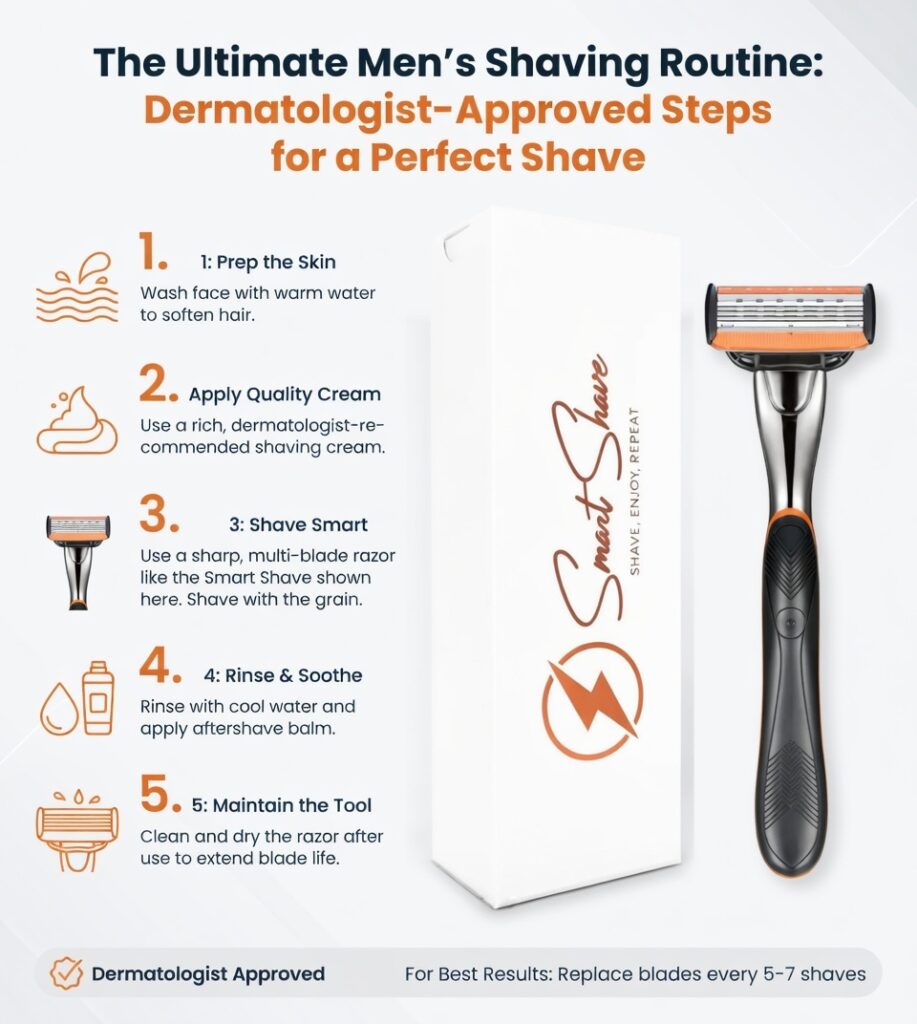
A proper shaving routine includes several key steps:
- Wash your face with warm water to soften hair.
- Apply shaving cream or gel to create lubrication.
- Use short strokes with light pressure.
- Shave in the direction of hair growth.
- Rinse the blade frequently during shaving.
- Rinse your face with cool water afterward.
- Apply a moisturizing aftershave balm.
Following these steps reduces irritation and improves overall shaving results.
Maintaining Your Razor
Proper razor care extends blade lifespan and improves hygiene.
Important maintenance practices include:
- Rinse blades thoroughly after shaving
- Shake off excess water
- Store razors outside the shower
- Replace cartridges when dull
Dermatologists often recommend replacing razor blades after five to ten uses, depending on hair thickness and shaving frequency.
Environmental Impact of Razors
Traditional disposable razors contribute significant plastic waste. Many cartridge systems also produce waste through discarded blade heads.
As environmental awareness grows, some consumers are exploring more sustainable shaving options such as safety razors or recyclable cartridge systems.
Reducing disposable plastic and extending blade lifespan can help reduce environmental impact.
The Future of Razor Technology
Razor technology continues to evolve. Manufacturers are experimenting with improved blade coatings, ergonomic handle designs, and flexible cartridge heads that adapt to facial contours.
New manufacturing techniques may also help create blades with more uniform steel structures, which could reduce microscopic cracking and extend blade lifespan.
Advances in materials science and engineering are likely to produce even more efficient shaving tools in the future.
Final Thoughts
Razors may appear simple, but they are the result of centuries of innovation and engineering. From early stone blades to advanced cartridge systems, shaving tools have evolved to provide safer, smoother, and more efficient grooming experiences.
Choosing the right razor depends on several factors, including skin type, hair thickness, and personal preference. Understanding how blades interact with hair and skin can help you make better decisions and improve your shaving routine.
Whether you prefer a traditional safety razor or a modern cartridge system, proper technique, blade care, and skin preparation are essential for achieving a comfortable shave.
With the right razor and the right approach, shaving can become a smooth and efficient part of your daily routine rather than a frustrating chore.
References
- Massachusetts Institute of Technology – Research on blade damage during hair cutting.
- Dermatology Times – Studies on razor blade design and multi-blade shaving mechanisms.
- Dermatology guidance on blade count and skin irritation.
- Dermatologist recommendations for replacing razor blades regularly.