
Shaving is a daily ritual for millions of men — and some women — worldwide. Yet for many, it comes with a frustrating side effect: skin irritation. Redness, razor burn, bumps, and ingrown hairs can make shaving a painful or uncomfortable experience. But it doesn’t have to be this way. With the right techniques, products, and habits, you can enjoy a smooth, comfortable shave while protecting your skin.
In this guide, we’ll cover everything you need to know about making shaving less irritating, including preparation, techniques, products, aftercare, and lifestyle habits that improve skin health over time. By the end, you’ll have a complete roadmap to shaving with confidence, whether you’re a daily shaver or occasional groomer.
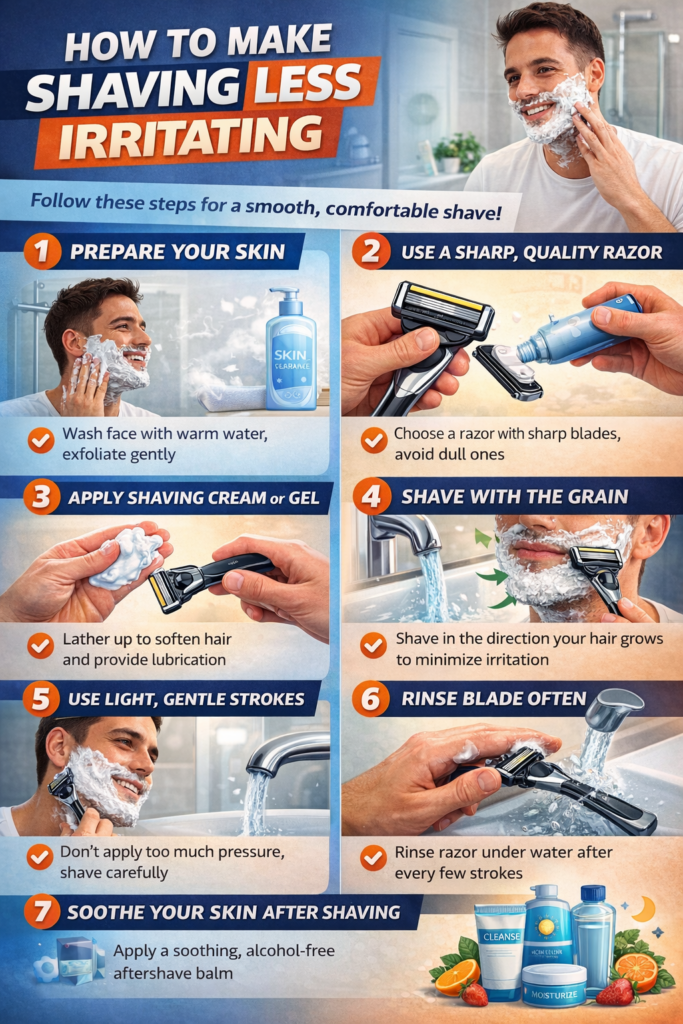
Why Shaving Can Irritate the Skin
Before we dive into solutions, it’s important to understand why shaving causes irritation in the first place. Skin irritation can occur for several reasons:
1. Mechanical Trauma
Shaving involves repeatedly dragging a blade over the skin. This can remove not only hair but also the top layer of dead skin cells. If done too aggressively or with dull blades, it can cause:
- Redness
- Micro-cuts
- Razor burn
2. Sensitive Skin
Some people have naturally more sensitive skin, making them more prone to reactions. Conditions like eczema, psoriasis, or rosacea can exacerbate irritation.
3. Improper Hydration or Lubrication
Shaving dry skin, or using a razor without sufficient lubrication (shaving cream, gel, or foam), increases friction and the likelihood of irritation.
4. Hair Type
Coarse, curly, or thick hair is more prone to ingrown hairs, which cause bumps and inflammation.
5. Bacteria and Infection
Small cuts or nicks can allow bacteria to enter the skin, leading to pimples, folliculitis, or further irritation.
Understanding these causes is the first step toward eliminating discomfort and achieving a smooth, healthy shave.
Step 1: Proper Preparation is Key
One of the most overlooked aspects of shaving is preparation. Proper preparation softens the hair, protects the skin, and allows the razor to glide smoothly.
1.1 Clean Your Skin
Start by washing your face or the area to be shaved with a gentle cleanser. This:
- Removes dirt, oil, and bacteria
- Softens hair slightly
- Prevents clogged razor blades
Use lukewarm water instead of hot water, which can dry out the skin and make it more prone to irritation.
1.2 Exfoliate Gently
Exfoliating 2–3 times a week removes dead skin cells, allowing the razor to cut hair rather than drag on the skin. Use a mild scrub or a chemical exfoliant (like glycolic or salicylic acid) for sensitive areas.
Tip: Avoid harsh scrubbing immediately before shaving — over-exfoliation can increase irritation.
1.3 Warm Compress or Shower
Shaving after a warm shower or applying a warm, damp towel to the area helps to:
- Open pores
- Soften hair
- Relax the skin
This makes shaving easier and reduces tugging, which is a common cause of irritation.
Step 2: Choose the Right Razor
Not all razors are created equal. The wrong razor can drastically increase irritation.
2.1 Single vs. Multi-Blade Razors
While multi-blade razors (like 3–5 blade systems) promise a closer shave, they can pull and tug hair, increasing irritation for sensitive skin. Sometimes, single or double-blade razors provide a gentler shave with fewer skin issues.
2.2 Sharpness Matters
Dull blades are a major cause of irritation. Replace blades regularly — typically every 5–10 shaves depending on hair thickness and density.
2.3 Ergonomic Handles
A comfortable handle reduces uneven pressure, which can prevent nicks and razor burn. Look for handles with good grip and weight balance.
2.4 Safety Razors vs. Cartridge Razors
Safety razors are often recommended for sensitive skin because:
- They use a single blade
- They reduce the risk of ingrown hairs
- They minimize repeated passes over the same skin
However, cartridge razors with lubricating strips can also work well if used correctly.
Step 3: Use High-Quality Shaving Products
Shaving creams, gels, and oils create a barrier between your skin and the blade, reducing friction and irritation.
3.1 Shaving Creams
- Choose products with moisturizing ingredients like aloe vera, vitamin E, or glycerin.
- Avoid heavily scented creams, as fragrances can irritate sensitive skin.
3.2 Shaving Gels
Gels are clear, which helps with precision. Look for aloe vera or chamomile-enriched gels to soothe the skin.
3.3 Pre-Shave Oils
Pre-shave oils are excellent for men with coarse hair. They:
- Soften hair
- Provide extra lubrication
- Reduce razor tugging
Combine with cream or gel for optimal results.
Step 4: Master Proper Shaving Technique
Technique is often more important than the razor or product. Following proper steps minimizes irritation.
4.1 Shave with the Grain
Always shave in the direction of hair growth, especially on the first pass. Shaving against the grain can give a closer shave but increases:
- Razor burn
- Ingrown hairs
- Redness
4.2 Use Light Pressure
Pressing too hard does not improve the shave — it only increases friction. Let the razor do the work.
4.3 Short Strokes
Use short, controlled strokes instead of long sweeps. This allows more precision and reduces repeated passes over the same area.
4.4 Rinse Frequently
Rinse the blade under warm water after 2–3 strokes to remove hair and cream buildup, keeping the razor clean and reducing skin pulling.
4.5 Avoid Over-Shaving
Multiple passes increase irritation. Limit shaving to two passes per area: one with the grain, and an optional light second pass if necessary.
Step 5: Post-Shave Care
Aftercare is crucial for soothing the skin and preventing irritation.
5.1 Rinse with Cool Water
After shaving, rinse your skin with cool water to:
- Close pores
- Reduce inflammation
- Calm the skin
5.2 Apply Aftershave or Moisturizer
Choose a fragrance-free moisturizer or soothing aftershave to restore hydration. Look for ingredients like:
- Aloe vera
- Chamomile
- Vitamin E
- Hyaluronic acid
Avoid alcohol-based aftershaves, which dry the skin and worsen irritation.
5.3 Spot Treatments for Irritation
If you notice razor burn or bumps:
- Use a gentle witch hazel toner to reduce redness
- Apply a healing ointment (like petroleum jelly) on inflamed areas
- Avoid scratching or picking at bumps
Step 6: Preventing Ingrown Hairs
Ingrown hairs are a common source of irritation. They occur when hair curls back into the skin instead of growing outward.
6.1 Exfoliate Regularly
Exfoliation prevents hair from being trapped under dead skin cells.
6.2 Shave with the Grain
Avoid shaving against the hair’s natural direction in areas prone to ingrowns.
6.3 Keep Skin Hydrated
Moisturized skin reduces hair breakage, which can cause ingrowns.
6.4 Use Targeted Treatments
Products containing salicylic acid or glycolic acid can prevent ingrown hairs by keeping pores clear and hair growing outward.
Step 7: Adjust Your Shaving Frequency
Shaving every day isn’t necessary for everyone. For some men:
- Daily shaving increases irritation
- Shaving every other day allows skin recovery
Listen to your skin. Adjust frequency based on sensitivity, hair growth, and lifestyle.
Step 8: Lifestyle Factors That Reduce Irritation
Healthy skin reduces shaving discomfort. Consider these habits:
8.1 Stay Hydrated
Proper hydration keeps skin supple, reducing cuts and razor burn.
8.2 Balanced Diet
Vitamin-rich diets support healthy skin:
- Vitamin A: Promotes skin repair
- Vitamin C: Supports collagen production
- Omega-3 fatty acids: Reduces inflammation
8.3 Limit Alcohol and Smoking
Both can dehydrate the skin and slow healing.
8.4 Manage Stress
Stress can worsen skin sensitivity and inflammation. Relaxation techniques like meditation, yoga, or light exercise help.
Step 9: Experiment with Different Products
Not all shaving products work the same for every individual. Trial and error helps find your ideal combination:
- Shaving cream vs. gel vs. soap
- Single-blade vs. multi-blade razors
- Pre-shave oils
- Aftershaves or soothing moisturizers
Document your routine and note which products minimize irritation the most.
Step 10: Consider Electric Shavers for Sensitive Skin
If traditional razors are too irritating:
- Electric razors reduce friction because they don’t touch the skin directly
- Foil or rotary shavers may be gentler on sensitive skin
- Some come with adjustable heads or trimmers to protect areas prone to razor burn
While they may not give a blade-close shave, they are an excellent alternative for reducing irritation.
Step 11: Special Tips for Facial Hair Types
Curly or Coarse Hair
- Always shave with the grain
- Use a single-blade or safety razor
- Apply pre-shave oil for extra lubrication
Thin or Fine Hair
- Multi-blade razors work well
- Moisturizing shave creams prevent unnecessary friction
Beard Maintenance
- Trim longer hair before shaving
- Avoid shaving directly over dense beards without softening hair with warm water or cream
Step 12: Dealing with Common Shaving Issues
Razor Burn
- Causes: Pressure, dull blades, over-shaving
- Solutions: Use fresh blades, shave with the grain, apply soothing moisturizer
Red Bumps
- Causes: Ingrown hairs, irritation
- Solutions: Gentle exfoliation, salicylic acid treatments, proper aftercare
Dry Skin
- Causes: Hot water, alcohol-based products, frequent shaving
- Solutions: Hydrate skin, switch to non-alcohol aftershaves, moisturize daily
Cuts and Nicks
- Causes: Improper technique, dull blades
- Solutions: Use light pressure, sharp blades, proper shaving angle
Step 13: Building a Shaving Routine
A consistent, methodical routine minimizes irritation:
- Morning or evening shower for soft skin
- Cleanse and exfoliate 2–3 times a week
- Apply shaving cream or gel
- Use a sharp, high-quality razor
- Shave with light pressure, short strokes
- Rinse, soothe, and moisturize
- Apply post-shave treatment if necessary
Consistency trains your skin to adapt to shaving and reduces long-term irritation.
Step 14: Products That Help Reduce Shaving Irritation
Some brands are particularly well-suited for sensitive skin:
- Smartshave Razors: Gentle on skin, lubricated blades with aloe vera and vitamin E
- Fragrance-free shaving creams: Minimize chemical irritation
- Aftershave balms: Non-alcohol formulas to calm skin
- Exfoliating scrubs: Mild, chemical or physical exfoliants
Choosing products tailored to your skin type is critical for minimizing discomfort.
Step 15: When to See a Dermatologist
If irritation persists despite following these tips, consult a dermatologist. Signs to watch for:
- Persistent redness or rash
- Severe ingrown hairs
- Unhealing cuts or sores
- Signs of infection
A dermatologist can recommend specialized products or treatments for sensitive skin.
Final Thoughts
Shaving doesn’t have to be uncomfortable. By following these 15 comprehensive steps, you can significantly reduce irritation and enjoy a smooth, healthy shave every time. Key takeaways include:
- Proper preparation softens hair and protects skin
- Razor choice and blade sharpness are critical
- Lubrication and shaving technique prevent friction and razor burn
- Post-shave care soothes and restores the skin
- Lifestyle factors like hydration, diet, and stress management improve skin resilience
By investing in the right products, routines, and habits, you can transform shaving from a daily irritation into a relaxing, enjoyable ritual. Smartshave Razors, paired with these strategies, are an excellent choice for men seeking a comfortable, irritation-free shave.