
Most men think about razor sharpness, closeness, and comfort when they shave, but very few consider what else might be living on their razor blade. Each time a razor touches the skin, it comes into contact with hair, dead skin cells, natural oils, moisture, and microscopic organisms. Over time, this creates an environment where bacteria can survive and multiply, even on blades that look clean to the naked eye. Razor blades are uniquely positioned to collect bacteria because shaving creates tiny cuts and abrasions in the skin. These micro-injuries are usually harmless, but they provide an entry point for bacteria if the blade is contaminated. When a razor is reused multiple times without proper care, bacteria can transfer back and forth between the blade and the skin, increasing the risk of irritation, folliculitis, and infection.
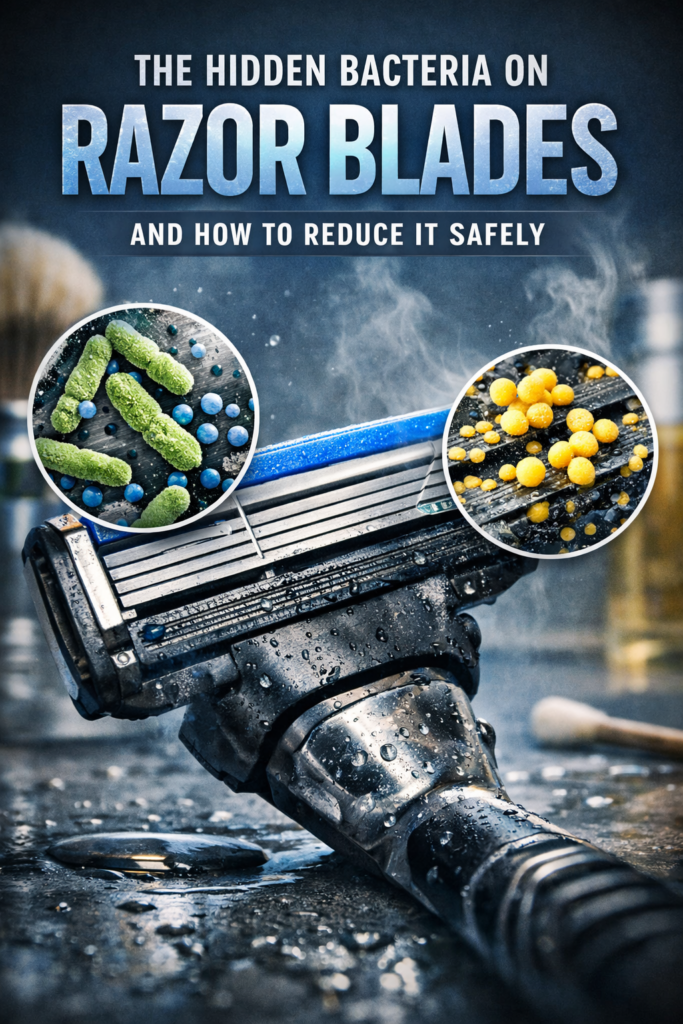
One of the reasons razor bacteria are often overlooked is that contamination is invisible. A blade can appear clean while still harbouring microorganisms. Warm, damp bathrooms create ideal conditions for bacterial survival, especially when razors are left wet between uses. Moisture trapped between blades or around the cartridge head allows bacteria to persist longer than many people realise. During shaving, hair follicles are briefly exposed. When bacteria are introduced into these follicles, they can trigger inflammation. This is one reason razor bumps and unexplained redness often appear days after shaving rather than immediately. The skin reacts to bacterial presence rather than just mechanical irritation.
Different types of bacteria can be found on razor blades. Common skin bacteria are usually harmless in small amounts, but when introduced into micro-cuts, they can cause problems. In some cases, environmental bacteria from water or surfaces can also contaminate blades. This is particularly relevant in areas with hard water, where mineral residue can trap bacteria on the blade surface. Repeated use of a blade increases bacterial load. Each shave deposits more organic material onto the blade. Even thorough rinsing under running water does not remove all residue. Over time, this buildup creates a biofilm, a thin layer that allows bacteria to cling to the metal surface and resist being washed away.
Dull blades worsen the problem. As blades lose sharpness, they tug at hair and scrape the skin more aggressively. This creates more micro-cuts, increasing the risk of bacteria entering the skin. Men often associate irritation with blade dullness alone, but bacterial contamination is frequently a hidden contributor.Storage habits play a major role in bacterial growth. Leaving a razor in the shower exposes it to constant humidity. Moisture prevents the blade from drying fully, extending bacterial survival. Even small amounts of water trapped between blades can keep bacteria alive for days. Sharing razors is particularly risky. Bacteria from one person’s skin can be transferred directly to another’s, increasing the risk of infection. Even within the same household, sharing razors should always be avoided.
Skin conditions such as acne, eczema, or sensitivity increase vulnerability. Compromised skin barriers allow bacteria to penetrate more easily. For men with these conditions, razor hygiene becomes even more important, as minor contamination can lead to disproportionate reactions. Reducing bacteria on razor blades does not require harsh chemicals or extreme measures. The goal is to minimise moisture, remove residue, and limit reuse beyond the blade’s effective lifespan. Simple habits make a significant difference when practiced consistently.
Thorough rinsing after each shave is essential, but it must be done correctly. Hot water helps dissolve oils and shaving product residue. Rinsing from multiple angles ensures that trapped hair and debris are flushed out from between blades. However, rinsing alone is not enough if moisture remains. Drying the blade is one of the most effective yet overlooked steps. Shaking off excess water and gently tapping the razor dry reduces moisture that bacteria need to survive. Allowing the razor to air-dry in a well-ventilated area further limits bacterial growth.
Avoiding blade contact with surfaces also matters. Setting a wet razor on a sink or shelf can transfer bacteria from the environment onto the blade. Keeping the razor upright or stored in a clean holder reduces contamination risk. Some men choose to disinfect blades periodically. Alcohol-based solutions can reduce bacterial presence, but they should be used sparingly. Overuse of harsh disinfectants can damage blade coatings and lubrication strips, shortening blade life. Gentle cleaning methods are generally sufficient for regular hygiene. Blade replacement frequency plays a crucial role in controlling bacteria. Even with good hygiene, blades accumulate residue over time. Replacing cartridges before they become dull reduces both mechanical irritation and bacterial load. Men who stretch blades beyond their effective lifespan increase their risk of skin issues.
Smartshave razors are designed with this balance in mind. Their cartridge design focuses on consistent sharpness and smooth glide, reducing the need for excessive pressure. Less pressure means fewer micro-cuts, which lowers the risk of bacteria entering the skin. Combined with proper blade care, this significantly improves shaving hygiene.
Lubrication strips also play an indirect role. Well-formulated strips reduce friction, allowing the blade to glide smoothly. This minimises skin trauma and limits the openings through which bacteria can enter. Smartshave’s Vitamin E and Aloe Vera lubrication strip supports skin comfort while helping reduce irritation that can make skin more vulnerable to infection.
It is also important to consider how shaving frequency affects bacterial risk. Daily shaving increases exposure, but it does not automatically increase infection risk if hygiene is maintained. Inconsistent hygiene combined with frequent shaving is what creates problems.Men who experience recurring razor bumps, pimples, or unexplained redness often assume their skin is the issue. In many cases, the real problem is bacterial transfer from contaminated blades. Improving blade care often resolves these issues without changing products.
Allowing razors to dry completely before packing and cleaning them after travel reduces contamination.Long-term skin health depends on preventing repeated low-grade infections. Chronic bacterial exposure can lead to ongoing inflammation, uneven skin texture, and increased sensitivity. These changes happen gradually and are often misattributed to ageing or skin type.
Understanding razor hygiene reframes shaving as more than a mechanical process. It is a form of skin contact that requires cleanliness as much as sharpness. A clean blade protects the skin just as effectively as a sharp one.Reducing bacteria safely is about consistency, not perfection. Drying the blade, storing it properly, and replacing it on time eliminate most risks. Extreme measures are rarely necessary when fundamentals are followed.
Ultimately, the hidden bacteria on razor blades are only a problem when they are ignored. When shaving tools are treated as skincare tools rather than disposable objects, skin health improves noticeably. Fewer bumps, less irritation, and more predictable shaves follow naturally. A clean razor is not just about hygiene. It is about respecting the skin’s ability to heal and protect itself. When bacterial exposure is reduced, the skin focuses on recovery rather than defence. Over time, this leads to smoother, calmer, and healthier skin with every shave.