
When people talk about razors, the conversation often focuses on blade count, cartridge design, or brand names. What rarely gets proper attention is the most important factor of all: the material the blade is made from. Blade material is the foundation of sharpness, comfort, and longevity. It determines how easily a razor cuts hair, how long it stays sharp, and how gentle it feels on the skin over time. Understanding blade materials explains why some razors glide smoothly for weeks while others feel dull after only a handful of shaves.
At a basic level, razor blades need to do two things exceptionally well. They must be hard enough to hold a sharp edge, and they must be tough enough to survive repeated contact with coarse hair, skin, water, and shaving products. These requirements are often in tension with each other. Materials that are extremely hard tend to be brittle, while materials that are very tough tend to struggle to maintain a fine edge. The best razor blades strike a precise balance between hardness, flexibility, and corrosion resistance.
Most modern razor blades are made from stainless steel, but the term “stainless steel” covers a wide range of alloys. Stainless steel is not a single material but a family of metal blends that combine iron with varying amounts of carbon, chromium, and other elements. The exact composition determines how hard the blade can be, how resistant it is to rust, and how well it responds to sharpening. High-quality razor blades use carefully engineered stainless steel alloys designed specifically for cutting performance rather than general durability.
Hardness is one of the most critical properties in razor blade performance. A harder blade can be sharpened to a finer edge, allowing it to cut hair cleanly with less force. This reduces tugging and pulling, which in turn reduces irritation. However, if a blade is too hard, it becomes brittle. Brittle blades develop microscopic chips along the edge, increasing friction and discomfort. The sharpest and longest-lasting blades are those that achieve optimal hardness without sacrificing structural integrity.
Carbon content plays a major role in this balance. Adding carbon to steel increases hardness and edge retention, but too much carbon makes steel prone to corrosion and brittleness. Razor manufacturers carefully control carbon levels to ensure blades can be sharpened finely while still surviving repeated use in wet conditions. This is one reason why high-quality blades feel consistent shave after shave, rather than degrading unpredictably.
Corrosion resistance is another defining factor of blade longevity. Shaving exposes blades to water, salts from skin, soap residue, and microscopic hair fragments. These elements create an aggressive environment for metal, especially along the blade edge where the steel is thinnest. Even stainless steel is vulnerable to micro-corrosion, which roughens the edge and increases drag. Razor blades designed for longevity use specific alloys and protective treatments to slow this process as much as possible.
Blade sharpness is not just about material choice, but also about how that material is shaped. Edge geometry determines how the blade interacts with hair. A thinner edge cuts more easily, requiring less pressure and reducing skin contact. However, extremely thin edges wear out faster if not properly supported. This is why blade material must work hand in hand with cartridge design. A well-supported thin blade made from high-quality steel can outperform a thicker blade made from inferior material.
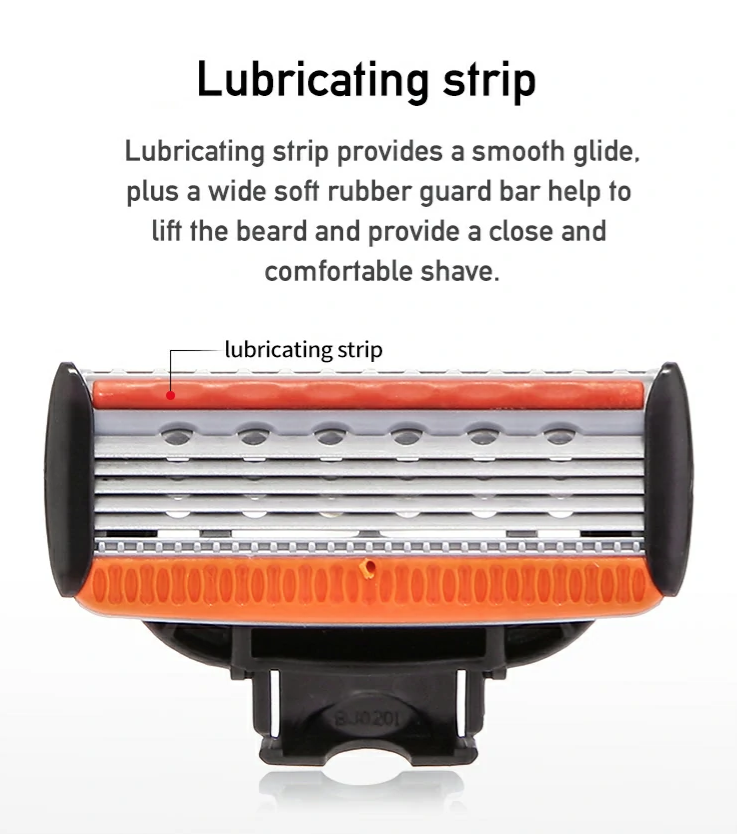
One of the biggest advancements in razor blade performance came from the use of blade coatings. Modern razor blades are almost never bare steel. Instead, they are layered with microscopic coatings designed to protect the blade and reduce friction. Common coating materials include chromium for corrosion resistance, platinum for durability, and low-friction polymers to improve glide. These coatings dramatically extend blade life and improve comfort, even when the underlying steel remains the same.
The role of coatings is often underestimated. While the steel provides the structure and sharpness, coatings determine how the blade feels against the skin. A coated blade glides more smoothly, encounters less resistance, and generates less heat during shaving. This reduces irritation and slows edge degradation. When a blade starts to feel dull quickly, it is often the coating wearing away rather than the steel itself losing sharpness.
Manufacturing precision also separates long-lasting blades from short-lived ones. High-quality razor blades are sharpened using advanced grinding and honing processes that produce extremely consistent edge angles. Even microscopic inconsistencies can cause uneven cutting and accelerated wear. Precision manufacturing ensures that each blade in a cartridge behaves predictably, reducing the need for extra pressure and multiple passes.
Heat treatment is another crucial step in blade production. After shaping, blades are heat-treated to adjust their internal structure. This process determines the final balance between hardness and toughness. Poor heat treatment results in blades that either dull quickly or chip under stress. Well-controlled heat treatment allows blades to maintain sharpness while withstanding repeated contact with tough beard hair.
Flexibility is an often-overlooked characteristic of blade materials. A blade must be rigid enough to cut efficiently but flexible enough to adapt slightly to facial contours. If a blade is too rigid, it digs into the skin on uneven surfaces. If it is too flexible, it skips and pulls hair. The steel alloy and heat treatment together determine how a blade flexes under pressure, directly affecting comfort and control.
Blade thickness also plays a role in performance. Thinner blades cut hair more easily, reducing the force required. However, thin blades rely heavily on material quality and coatings to prevent rapid wear. Cartridge razors are designed to support thin blades securely, allowing them to deliver close, comfortable shaves without excessive flexing. This combination of thin blade geometry and high-quality materials is one reason modern cartridge systems can outperform older designs.
Longevity is not solely determined by how sharp a blade is on day one. It is determined by how slowly that sharpness degrades. High-quality blade materials resist corrosion, hold coatings longer, and maintain edge geometry over repeated use. This means fewer uncomfortable shaves toward the end of a blade’s life and more consistent performance overall.
Understanding blade materials also explains why cheaper razors often feel inconsistent. Lower-cost blades may use inferior steel alloys, thinner coatings, or less precise manufacturing processes. These shortcuts reduce production costs but lead to faster dulling, increased friction, and greater skin irritation. While the initial shave may feel acceptable, performance drops off quickly.
In contrast, blades made from well-balanced stainless steel alloys with advanced coatings and precise manufacturing deliver a different experience. They cut hair cleanly with minimal pressure, maintain glide over time, and feel predictable from shave to shave. This consistency is what most people describe as a “good razor,” even if they cannot identify the technical reasons behind it.
Ultimately, the sharpest and longest-lasting razor blades are the result of material science rather than marketing claims. Steel composition, hardness, corrosion resistance, edge geometry, coatings, and manufacturing precision all work together to determine performance. No single factor guarantees a great shave, but when all are aligned, the result is a blade that cuts efficiently while remaining gentle on the skin.Choosing a razor with high-quality blade materials is an investment in comfort as much as performance. Better materials mean fewer passes, less pressure, and reduced irritation. Over time, this leads to healthier skin and a more reliable shaving routine. Blade materials may be invisible during use, but they are the hidden difference between a razor that merely removes hair and one that delivers a consistently smooth, comfortable shave.