

Finding a shaving routine that protects sensitive skin without sacrificing sustainability is a real challenge for many men in the UK. Irritation and rough patches often crop up when harsh chemicals or disposables hit your face, but eco-friendly options can seem expensive or confusing. Discover practical steps for gentle, irritation-free grooming using affordable subscription solutions and eco-friendly shaving products that respect both your skin and the environment.
Table of Contents
- Step 1: Prepare Your Skin With Gentle Cleansing
- Step 2: Select Eco-Friendly Shaving Tools And Products
- Step 3: Apply Soothing Lather For Optimal Glide
- Step 4: Shave With Careful Strokes Following Hair Direction
- Step 5: Soothe And Protect Skin Post-Shave
Quick Summary
| Essential Insight | Clarification |
|---|---|
| 1. Cleanse with warm water and gentle cleanser | Start with warm water and a fragrance-free cleanser to prepare your skin for shaving, avoiding irritation from dirt and oils. |
| 2. Use eco-friendly shaving tools and products | Opt for reusable razors and natural creams or soaps to reduce environmental impact and skin irritation caused by harmful chemicals. |
| 3. Apply generous lather for protection | A thick, creamy lather softens hair and creates a barrier on your skin, minimising friction and potential irritation during shaving. |
| 4. Shave with the grain using short strokes | Always shave in the direction of hair growth using light, controlled strokes to prevent irritation and ingrown hairs. |
| 5. Implement effective post-shave care | Rinse with cool water, gently pat dry, and apply moisturisers with soothing ingredients within minutes to restore and protect your skin. |
Step 1: Prepare your skin with gentle cleansing
Gentle cleansing is the foundation of irritation-free shaving. You’re removing dirt, oils, and dead skin cells that can clog your razor and cause inflammation, but you need to do this carefully to avoid stripping your skin’s natural moisture.
Start with warm water and a cleanser suited to your skin type. Warm water opens your pores and softens facial hair, making the shaving process smoother and less aggressive. If you have sensitive skin, avoid hot water, which can further irritate and dry out your complexion.
Use these cleansing steps:
- Splash your face with warm water to wet your skin thoroughly
- Apply a gentle, fragrance-free cleanser in circular motions
- Rinse completely with warm water until no product residue remains
- Pat your skin dry with a soft, clean towel (never rub harshly)
Don’t skip cleansing because you think your skin is already clean. Even overnight, your face accumulates dust, bacteria, and oils that interfere with a close shave and increase irritation risk.
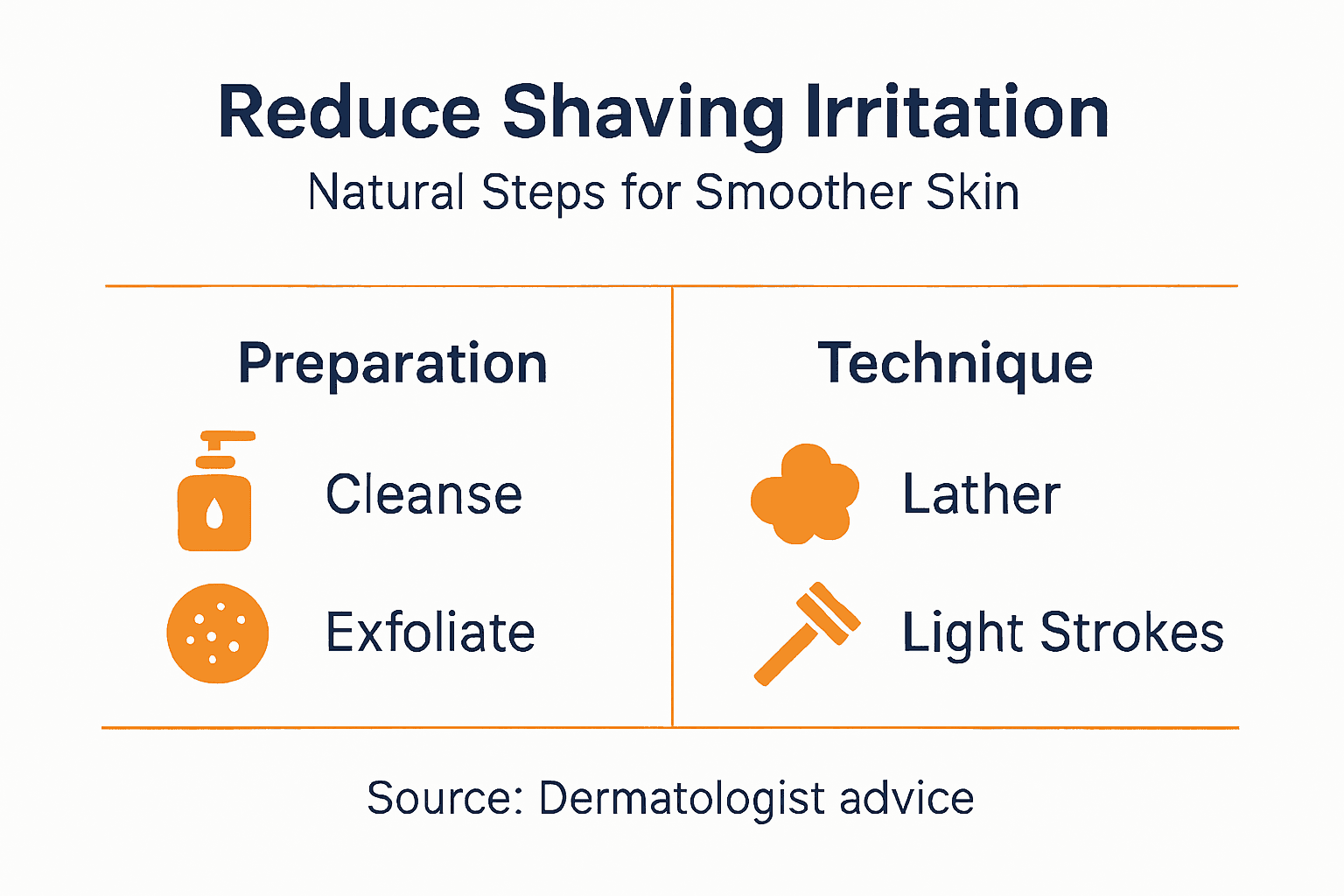
The next consideration is exfoliation. Proper exfoliation helps unclog pores and smooth your skin’s surface before shaving, but timing matters. Exfoliate gently 24 hours before shaving, not immediately before, to avoid over-sensitising your skin.
When exfoliating, choose either mechanical (soft brush or gentle scrub) or chemical methods (alpha or beta hydroxy acids), but never both on the same day. Harsh exfoliation causes inflammation and irritation, defeating the purpose of preparing your skin. Let your skin rest between cleansing and shaving if possible.
For quick reference, here’s a comparison of mechanical and chemical exfoliation methods for pre-shave skin preparation:
| Exfoliation Method | Typical Tools/Ingredients | Suitability for Sensitive Skin | Best Usage Timing |
|---|---|---|---|
| Mechanical | Soft brush, gentle facial scrub | Gentle types preferred, avoid harsh | 24 hours before shaving |
| Chemical | Alpha or beta hydroxy acids | Mild formulations only, patch test | 24 hours before shaving |
This guide helps clarify the benefits of each approach when preparing for a smooth, irritation-free shave.
Warm water and a gentle cleanser remove debris without disrupting your skin’s protective barrier—the true key to reducing irritation.
Follow cleansing with light moisturising. Skin cycling involves alternating cleansing, exfoliating, and moisturising to maintain skin balance. A hydrating moisturiser applied to damp skin locks in moisture and prepares your complexion for shaving by reducing dryness and irritation potential.
Think of cleansing as removing obstacles, not preparing a sterile surface. Your goal is a healthy, hydrated foundation that your razor glides over smoothly.
Pro tip: Use lukewarm water rather than hot water during cleansing, as excessive heat opens pores too wide and increases sensitivity during shaving; aim for comfortable warmth that softens facial hair without overdrying your skin.
Step 2: Select eco-friendly shaving tools and products
Choosing the right tools and products makes a tangible difference to both your skin and the environment. You’re looking for razors and creams that minimise plastic waste, avoid harsh chemicals, and deliver a smooth shave without irritation.
Start by evaluating your razor choice. Reusable razors significantly reduce plastic waste compared to disposable cartridges, and many are crafted from recycled or biodegradable materials. A quality reusable razor with replaceable heads costs less over time and creates far less landfill impact. Look for razors designed with ergonomic handles and precision blade alignment to protect sensitive skin.
When selecting shaving products, prioritise those with transparent ingredient labelling. Products free of harmful restricted ingredients protect both your complexion and the environment. Avoid synthetic fragrances, parabens, and other potentially irritating chemicals that commonly appear in conventional shaving creams.
Here’s what to look for when shopping:
- Razors made from recycled or biodegradable materials
- Natural ingredient shaving creams or soaps without synthetic additives
- Products with certifications indicating safer formulations
- Minimal or recyclable packaging
- Brands transparent about ingredient sourcing
Certifications matter. Look for labels like the EPA Safer Choice designation, which signals that a product meets strict environmental and safety standards. These certifications remove guesswork from your purchasing decision.
Shaving creams and soaps infused with natural ingredients like vitamin E and aloe vera address sensitive skin directly whilst supporting environmental sustainability. These ingredients soothe irritation, lock in moisture, and provide glide without harsh chemicals. Compare ingredient lists side by side before purchasing.
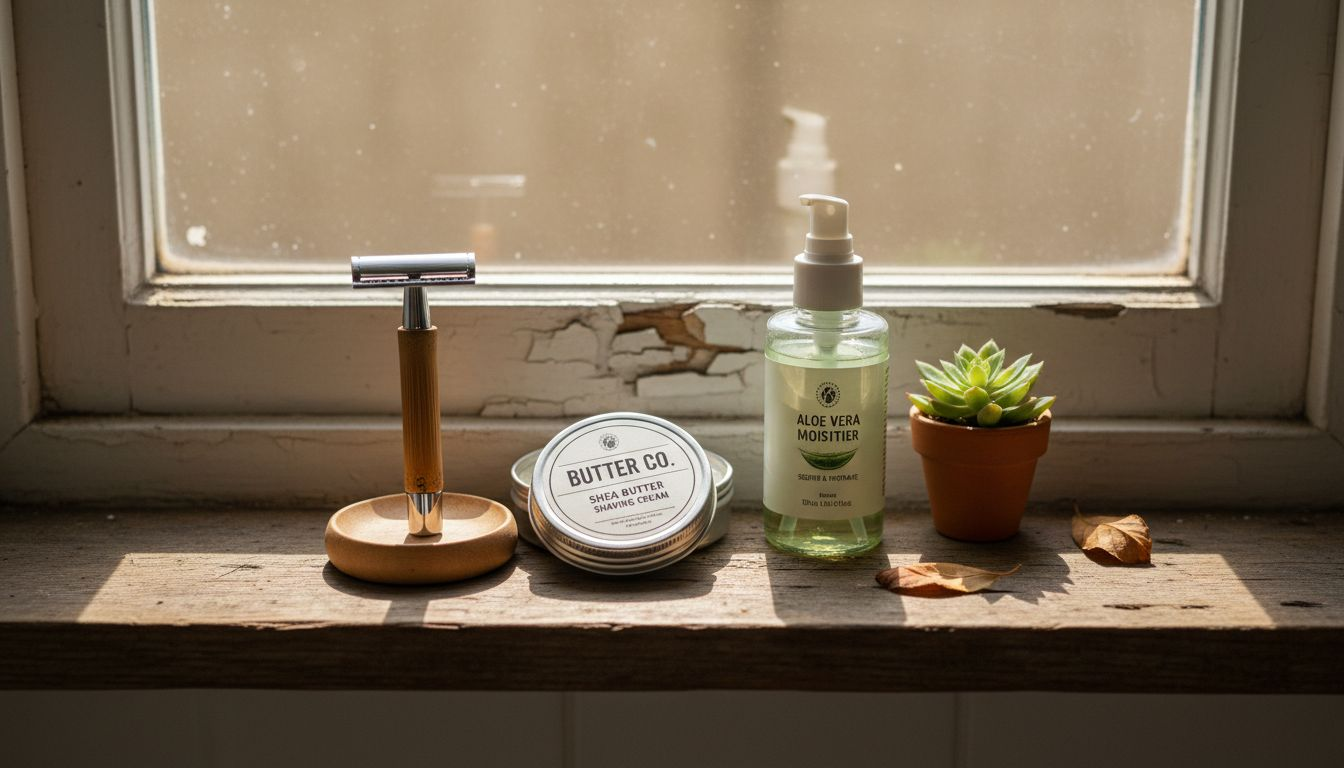
To assist your choice, here’s a summary of eco-certifications and what they indicate for shaving products:
| Certification | Meaning for Product | Environmental Benefit | Skin Impact |
|---|---|---|---|
| EPA Safer Choice | Meets high safety standards | Lower chemical pollution | Gentler foam, less irritation |
| EU Ecolabel | Reduced environmental footprint | Minimises waste, energy use | Suitable for sensitive skin |
| COSMOS Organic | Organic ingredients verified | Supports sustainable agriculture | Free from synthetic additives |
These certifications provide assurance of both environmental responsibility and skin safety.
Eco-friendly products aren’t a compromise—they often outperform conventional options because natural ingredients are gentler on sensitive skin whilst reducing environmental harm.
Consider your budget alongside sustainability. Reusable razors require an initial investment but cost significantly less per shave over months and years. Subscription models from reputable eco-conscious brands often provide refill cartridges at affordable prices, balancing affordability with environmental responsibility.
Test products gradually rather than switching everything at once. Your skin needs time to adapt to new formulations, and introducing multiple changes simultaneously makes it difficult to identify what actually works for your complexion.
Pro tip: Check product labels for “free from” claims rather than relying solely on marketing language; brands highlighting what they exclude (parabens, synthetic fragrances, sulphates) are often more transparent about their formulations than those making broad eco-friendly claims.
Step 3: Apply soothing lather for optimal glide
A quality lather is your razor’s best friend. It softens facial hair, lubricates your skin, and creates a protective barrier that minimises friction and irritation. Without proper lather, your razor drags across skin, causing the very irritation you’re trying to prevent.
Start by wetting your face thoroughly with warm water. This opens your pores and prepares your skin to absorb the lather. Then apply a generous amount of your chosen shaving cream or natural soap to your entire shaving area.
Use these application steps for optimal results:
- Dispense a generous dollop of shaving cream (roughly the size of a walnut)
- Dampen a shaving brush with warm water
- Work the cream into a rich, creamy lather using circular motions
- Apply the lather evenly across your entire face, lifting hairs as you go
- Allow 30 seconds for the lather to soften your facial hair
Natural plant-based lathers reduce friction and allow your razor to glide smoothly, minimising irritation and razor burn. If you’re using a natural soap lather made from ingredients like soapwort or yucca, these gentler formulations are particularly beneficial for sensitive skin compared to harsh synthetic alternatives.
The thickness of your lather matters significantly. Too thin and your razor lacks lubrication; too thick and you can’t see where you’re shaving. Aim for a consistency that’s creamy, opaque, and substantial enough to cushion your skin.
A generous, well-applied lather does most of the irritation-reduction work before your razor even touches your skin.
Applying a generous amount of shaving cream helps lift hairs and soften them, protecting your skin from razor damage. This protective layer is non-negotiable for sensitive skin. Some men skip this step or apply too little, which directly increases irritation risk and ingrown hairs.
Keep your lather moist throughout your shave. If it begins drying, splash your face with warm water and reapply where needed. Dry patches compromise your protection and force your razor to work harder.
Invest in a quality shaving brush if you haven’t already. Brushes work the lather into a superior consistency and lift your facial hair, preparing it for cutting. Natural bristle or synthetic brushes both work well, so choose based on your preference and budget.
Pro tip: Allow your lather to sit on your face for 30 to 45 seconds after application before shaving; this extra time softens stubborn facial hair further and gives your skin time to relax, resulting in a noticeably smoother and less irritated shave.
Step 4: Shave with careful strokes following hair direction
How you move your razor matters as much as what razor you’re using. The direction and pressure of your strokes determine whether you get a smooth shave or irritated skin. This is where technique separates a comfortable shave from a frustrating one.
Before you begin, identify your hair growth direction. Run your hand across your face and feel where your stubble feels smoother. This is the direction hair grows. You’ll shave with this grain, not against it, to protect your skin.
Follow these stroking techniques for optimal results:
- Use short, controlled strokes rather than long, aggressive ones
- Shave with the grain, moving in the direction hair grows naturally
- Maintain a consistent blade angle of approximately 30 degrees to your skin
- Apply light to medium pressure; let the blade do the work
- Rinse your razor frequently to prevent clogging
Shaving in the direction of hair growth minimises irritation and reduces ingrown hairs significantly. When you shave against the grain, you cut hair below the skin surface, which creates sharp tips that curl back and become ingrown. This is one of the primary causes of razor bumps and irritation.
Short strokes give you better control and reduce the risk of cuts. Long, sweeping motions are harder to control and often press too hard against your skin. Think of it as gentle guidance rather than aggressive scraping across your face.
Professional barbers shave with the grain using short, precise strokes because it protects skin integrity while delivering a close shave.
Maintain consistent pressure throughout your shave. Many men press harder on difficult areas, which increases irritation and trauma. If an area is stubborn, reapply lather and allow it to soften further rather than pressing harder.
Pay attention to facial contours. Your cheeks, chin, and neck have different hair growth patterns. Adapt your stroke direction as you move around your face to always follow the grain. This requires slightly more attention but dramatically improves results.
Rinse your blade frequently as you shave. Build-up of hair and lather clogs the blade and forces you to press harder to compensate. A clean blade glides effortlessly and reduces the work your skin endures.
Pro tip: On your first pass, shave with the grain using light pressure; if you want a closer shave, you can do a second pass with the grain in areas that need it, but avoid shaving against the grain entirely, which is the leading cause of irritation in men with sensitive skin.
Step 5: Soothe and protect skin post-shave
What you do immediately after shaving matters as much as the shave itself. Your skin has just been stressed by the razor, and it needs proper care to heal, calm down, and regain its protective barrier. Neglecting post-shave care undoes all the irritation-reduction work you’ve done.
Rinse your face with cool water first. Cool water closes your pores and reduces inflammation from the shaving process. Pat your skin dry gently with a clean, soft towel—never rub harshly, which can further irritate freshly shaved skin.
Follow this post-shave care sequence:
- Rinse thoroughly with cool water to remove all lather and loose hair
- Pat skin dry with a soft towel using gentle pressing motions
- Apply a soothing balm or moisturiser within two minutes of finishing
- Wait five minutes before dressing to allow products to absorb
- Avoid touching your face unnecessarily for several hours
Applying moisturisers or skin protectants helps restore the skin’s natural barrier and prevents dryness or irritation. Choose fragrance-free, gentle lotions or creams specifically formulated for sensitive skin. Alcohol-based aftershaves cause stinging and inflammation, so avoid them entirely, particularly if you have sensitive skin.
Look for post-shave products containing soothing ingredients like aloe vera, vitamin E, or chamomile. These calm inflammation, reduce redness, and accelerate skin healing. Apply a generous amount to your entire face, paying particular attention to areas that felt irritated during shaving.
The best post-shave care happens within minutes of finishing, not hours later—this is when your skin is most receptive to healing ingredients.
If you’ll be spending time outdoors, protecting skin from UV exposure after shaving is essential. Apply broad-spectrum sunscreen with SPF 15 or higher at least 15 minutes before going outside. Newly shaved skin is particularly vulnerable to UV damage, which increases irritation, redness, and long-term skin damage.
Avoid intense exercise, hot showers, or saunas for at least two hours after shaving. Heat opens your pores and forces irritants deeper into your skin. Give your skin time to stabilise and your products time to work effectively.
Skip heavy fragrances, colognes, and aftershaves on shaving days. These irritate freshly shaved skin and can cause burning or redness. Wait until evening or the next day to apply fragrances if desired.
Pro tip: Keep your post-shave moisturiser in the refrigerator; the cool temperature provides additional soothing relief when applied to warm, freshly shaved skin, and it helps reduce inflammation and redness more effectively than room-temperature products.
Embrace a Smooth, Irritation-Free Shave with Smartshave
Struggling with shaving irritation despite all your careful preparation This article highlights the pain points of razor burn, dryness, and inflammation that many men with sensitive skin face daily. Achieving a gentle glide and skin protection means selecting the right tools and products designed specifically to soften facial hair, reduce friction, and calm the skin post-shave. That is exactly where Smartshave.co.uk makes a difference by offering eco-friendly, precision-engineered razors and grooming sets infused with soothing ingredients like vitamin E and aloe vera to support your skin health naturally.

Experience the benefits of switching to a sustainable shaving routine today. Discover the difference that high-quality, environmentally conscious products can make for your skin and the planet. Take the next step towards irritation-free shaving by visiting Smartshave.co.uk and explore our carefully curated selection of shaving solutions designed for men in the UK. Don’t wait because your skin deserves the care and comfort provided by Smartshave’s premium offerings tailored to your sensitive skin needs.
Frequently Asked Questions
How can I prepare my skin before shaving to reduce irritation?
Start by gently cleansing your skin with warm water and a suitable cleanser for your skin type. Follow this with light exfoliation 24 hours prior to shaving to smooth your skin’s surface and prevent irritation.
What are some eco-friendly shaving tools I can use?
Opt for reusable razors made from recycled or biodegradable materials to significantly reduce plastic waste. Choose natural shaving creams that avoid synthetic additives and keep an eye out for transparent ingredient labels for safety.
How do I apply shaving cream for the best results?
Dispense a generous amount of shaving cream and work it into a rich lather using a damp shaving brush. Apply the lather evenly across your face, allowing it to sit for 30 seconds before shaving to soften your hair and improve glide.
What technique should I use while shaving to minimise irritation?
Shave in the direction of hair growth using short, controlled strokes and a consistent blade angle. Maintain light pressure, allowing the blade to do the work, and rinse your razor frequently to prevent clogging and irritation.
What should I do after shaving to calm my skin?
Immediately rinse your face with cool water to close pores and reduce inflammation before patting it dry. Apply a soothing balm or moisturiser designed for sensitive skin within two minutes after shaving to restore hydration and protect your skin’s barrier.
Recommended
- How to Get a Smooth Shave Without Irritation – Smart Shave
- How to Shave Properly: Expert Tips for a Smooth, Irritation-Free Shave – Smart Shave
- How to Make Shaving Less Irritating: The Ultimate Guide for Smooth, Comfortable Skin – Smart Shave
- How to Get a Smooth, Irritation-Free Shave at Home – Smart Shave
- Aloe Shaving Cream – Didis Beauty Center
- 7 Natural Skincare Benefits Every Woman Should Know
- 7 Sensitive Skin Care Tips for Elegant, Gentle Results – Passé Daisy