

Shaving with sensitive skin often feels like choosing between irritation and environmental guilt. Disposable razors pile up in landfills while your face burns with razor bumps. This guide shows you how to achieve a smooth, comfortable shave using affordable, eco-friendly methods that protect both your skin and the planet, reducing irritation by up to 40% through proper technique and sustainable products.
Table of Contents
- What You Need Before You Start: Shaving Prerequisites And Tools
- Step 1: Skin Preparation And Cleansing
- Step 2: Choosing Eco-Friendly Reusable Razors
- Step 3: Applying Skin-Friendly Shaving Cream
- Step 4: Shaving Techniques For Sensitive Skin
- Step 5: Post-Shave Care And Skin Protection
- Common Shaving Mistakes And Troubleshooting
- Cost, Environmental Impact, And Subscription Benefits
- Expected Results And How To Measure Success
- Discover Eco-Friendly Razors & Kits For Sensitive Skin
- How To Get A Smooth Shave: Frequently Asked Questions
Key Takeaways
| Point | Details |
|---|---|
| Prepare skin properly | Warm water and gentle cleansing soften hair and reduce irritation before shaving. |
| Choose eco razors | Reusable razors with replaceable blades cut plastic waste and offer better control for sensitive skin. |
| Apply natural cream | Shaving products with aloe vera and vitamin E soothe skin and minimize friction during shaving. |
| Shave with the grain | Light pressure and following hair growth direction prevent razor burn and ingrown hairs. |
| Post-shave care matters | Cool water rinse and moisturizer lock in hydration and calm inflammation after shaving. |
What You Need Before You Start: Shaving Prerequisites and Tools
Proper preparation makes the difference between a comfortable shave and hours of regret. You need the right tools and products before touching a razor to your face.
Start with warm water and a fragrance-free cleanser. These prep your skin and soften facial hair to reduce tugging and irritation. Skip hot water, which strips natural oils and leaves skin vulnerable.
Reusable safety razors made from durable metals like stainless steel and bamboo handles provide a smoother, more controlled shave for sensitive skin while drastically reducing plastic waste compared to disposable razors. These eco-friendly reusable razors feature replaceable blades that cost £1 to £3 each, far less than multi-blade cartridge systems.
Natural shaving creams with aloe vera and vitamin E create a protective barrier between blade and skin. These ingredients soothe inflammation while the thick lather reduces friction. Avoid synthetic fragrances and harsh chemicals that dry out sensitive skin.
Round out your setup with a clean towel and quality moisturizer. Pat dry instead of rubbing to protect your skin barrier.
Essential Shaving Tools Comparison
| Tool Type | Key Features | Benefits for Sensitive Skin |
|---|---|---|
| Reusable Safety Razor | Metal or bamboo handle, replaceable blades | Better control, reduced irritation, eco-friendly |
| Natural Shaving Cream | Aloe vera, vitamin E, no synthetic fragrance | Soothes inflammation, protects skin barrier |
| Gentle Cleanser | Fragrance-free, pH-balanced | Prepares skin without stripping oils |
| Quality Moisturizer | Non-comedogenic, hydrating ingredients | Restores moisture, prevents dryness |
Investing in best shaving kits for sensitive skin saves money long term while protecting both your face and the environment.
Step 1: Skin Preparation and Cleansing
Your shave quality depends entirely on preparation. Skip this step and you guarantee irritation.
Pro Tip: Use a warm towel compress for 30 seconds before cleansing to further soften hair and open pores, making razor glide easier.
Use warm water and gentle cleanser to remove dirt and soften hair; avoid hot water which dries sensitive skin. Hot water strips protective oils and leaves skin vulnerable to razor burn. Warm water opens pores without damage.
Follow this preparation sequence:
- Splash face with warm water for 30 seconds to soften hair follicles and open pores naturally.
- Apply fragrance-free cleanser and massage gently in circular motions to remove dirt, oil, and dead skin cells.
- Rinse thoroughly with warm water, ensuring no cleanser residue remains on skin.
- Pat face dry with a clean towel instead of rubbing, which can irritate sensitive skin.
- Check that facial hair feels softer to the touch before applying shaving cream.
This pre-shave skin preparation routine takes three minutes but prevents hours of discomfort. Softened hair means less tugging, which directly translates to less irritation. Clean skin allows the razor to glide smoothly without catching on oil or debris.
Never rush this step. The time you invest in preparation directly correlates with shave comfort. Your skin will thank you.
Step 2: Choosing Eco-Friendly Reusable Razors
After skin prep, your razor choice determines both environmental impact and shave quality. Disposables might seem convenient, but they damage your wallet and the planet.
Reusable safety razors made of stainless steel or bamboo with replaceable blades reduce plastic waste and give better control, lowering irritation for sensitive skin. The weight and balance of quality razors provide precision that flimsy disposables cannot match.
Initial investment ranges from £20 to £50, but replacement blades cost just £1 to £3 each. Compare that to cartridge razors at £3 to £5 per cartridge, and the savings become obvious. One quality razor lasts years with proper care.
Switching from disposable to reusable razors reduces plastic waste by billions of units annually in the UK alone. Every blade you replace instead of tossing an entire razor makes a difference.
Disposable vs Reusable Razor Comparison
| Factor | Disposable Razors | Reusable Safety Razors |
|---|---|---|
| Initial Cost | £5 to £10 for pack | £20 to £50 one-time |
| Blade Replacement | £3 to £5 per cartridge | £1 to £3 per blade |
| Annual Cost | £60 to £100 | £15 to £30 |
| Plastic Waste | High, entire unit discarded | Minimal, only blades replaced |
| Skin Irritation | Higher due to multiple blades | Lower with single sharp blade |
| Longevity | 3 to 10 shaves per razor | Years with blade replacement |
Pro Tip: Choose a razor with a bamboo handle for added eco benefits and natural antibacterial properties that keep your razor cleaner between uses.
These modern reusable razors for sensitive skin combine sustainability with superior shave quality. The investment pays for itself within months while protecting the environment.
Step 3: Applying Skin-Friendly Shaving Cream
With your razor ready, proper cream application creates the protective layer your skin needs during shaving.
Thick, creamy lather softens hair and reduces friction between blade and skin. This cushion prevents the dragging sensation that causes irritation and razor burn.
Select creams with soothing ingredients like aloe vera and vitamin E. These natural compounds calm skin while protecting against inflammation. Aloe vera provides cooling relief, while vitamin E nourishes and repairs skin cells.
Avoid products with synthetic fragrances and harsh chemicals. These additives dry skin and trigger reactions in sensitive complexions. Natural formulations work better and cost less long term.
Apply cream evenly across the shaving area:
- Warm the cream slightly between your palms to activate ingredients and make application easier.
- Spread a generous layer over damp skin using circular motions to lift hair away from the face.
- Ensure complete coverage with no bare spots where the razor might catch skin directly.
- Let the cream sit for 30 seconds to fully soften hair before beginning your shave.
Quality skin-friendly shaving creams for sensitive skin make the difference between comfort and irritation. Don’t skimp on this step.
Step 4: Shaving Techniques for Sensitive Skin
Technique matters more than equipment. Perfect products cannot save poor shaving habits.
Shave with the grain using short, light strokes. Common shaving mistakes like excessive pressure and shaving against the grain increase irritation and razor bumps by over 50%. Let the blade weight do the work instead of pressing down.
Pro Tip: Stretch skin slightly with your free hand to create a taut surface for a closer, gentler shave without extra pressure.
Follow these shaving techniques for sensitive skin:
- Hold the razor at a 30-degree angle against your skin for optimal blade contact without digging in.
- Use short strokes of 2 to 3 inches in the direction hair grows naturally.
- Rinse the blade under warm water after every two strokes to remove hair and cream buildup.
- Avoid going over the same area more than twice to prevent irritation from repeated passes.
- Reapply shaving cream if you need a second pass over any section.
Light pressure prevents cuts and irritation. Your razor blade should glide across skin, not scrape it. If you hear scratching sounds, you’re pressing too hard.
Rinse blades frequently. Clogged blades tug hair instead of cutting cleanly, causing inflammation and ingrown hairs. Clean blades work better and last longer.
These prevent razor burn tips transform your shaving experience when practiced consistently.
Step 5: Post-Shave Care and Skin Protection
Proper aftercare locks in the benefits of good technique. Skip this and irritation catches up within hours.
Rinsing with cool water closes pores; moisturizers with aloe vera or chamomile soothe and restore hydration, preventing dryness and irritation. Cool water also reduces inflammation immediately after shaving.
Follow these post-shave care steps for sensitive skin:
- Rinse face thoroughly with cool water to remove all shaving cream residue and close pores.
- Pat skin dry gently with a clean towel instead of rubbing, which can irritate freshly shaved skin.
- Apply moisturizer containing soothing ingredients like aloe vera or chamomile within two minutes of drying.
- Keep skin hydrated throughout the day by drinking water and avoiding harsh environmental conditions.
- Avoid alcohol-based aftershaves that strip moisture and cause stinging on sensitive skin.
Your skin loses moisture after shaving. Quality moisturizer restores the protective barrier and prevents flaking. Look for non-comedogenic formulas that won’t clog pores.
Hydration matters beyond topical products. Drink adequate water daily to maintain skin elasticity and resilience. Dehydrated skin reacts more severely to shaving stress.
Consistent aftercare compounds over time. Your skin becomes more resilient with each proper shave routine.
Common Shaving Mistakes and Troubleshooting
Even experienced shavers make errors that sabotage results. Knowing these pitfalls helps you avoid them.
Applying too much pressure, shaving against the grain, and skipping cleansing increase irritation and the risk of razor bumps by over 50%. These mistakes compound, turning a simple shave into a painful experience.
Avoid these common shaving mistakes:
- Pressing too hard causes cuts, razor burn, and inflammation; let blade weight provide the cutting force.
- Shaving against hair growth leads to ingrown hairs and painful bumps that take days to heal.
- Skipping pre-shave cleansing clogs blades with oil and dead skin, causing uneven cuts and irritation.
- Using dull or dirty blades results in tugging, uneven shaves, and increased infection risk.
- Rushing through the process leads to missed spots and repeated passes that irritate skin.
Replace blades every five to seven shaves for optimal performance. Dull blades tug hair instead of cutting cleanly, causing significant irritation. Clean razors thoroughly after each use to prevent bacteria buildup.
Listen to your skin. Redness, bumps, or stinging indicate technique problems. Adjust pressure, direction, or products accordingly. Your face provides immediate feedback when something isn’t working.
Troubleshooting these issues transforms frustrating shaves into comfortable routines.
Cost, Environmental Impact, and Subscription Benefits
Beyond technique, your shaving choices affect your wallet and the planet significantly.
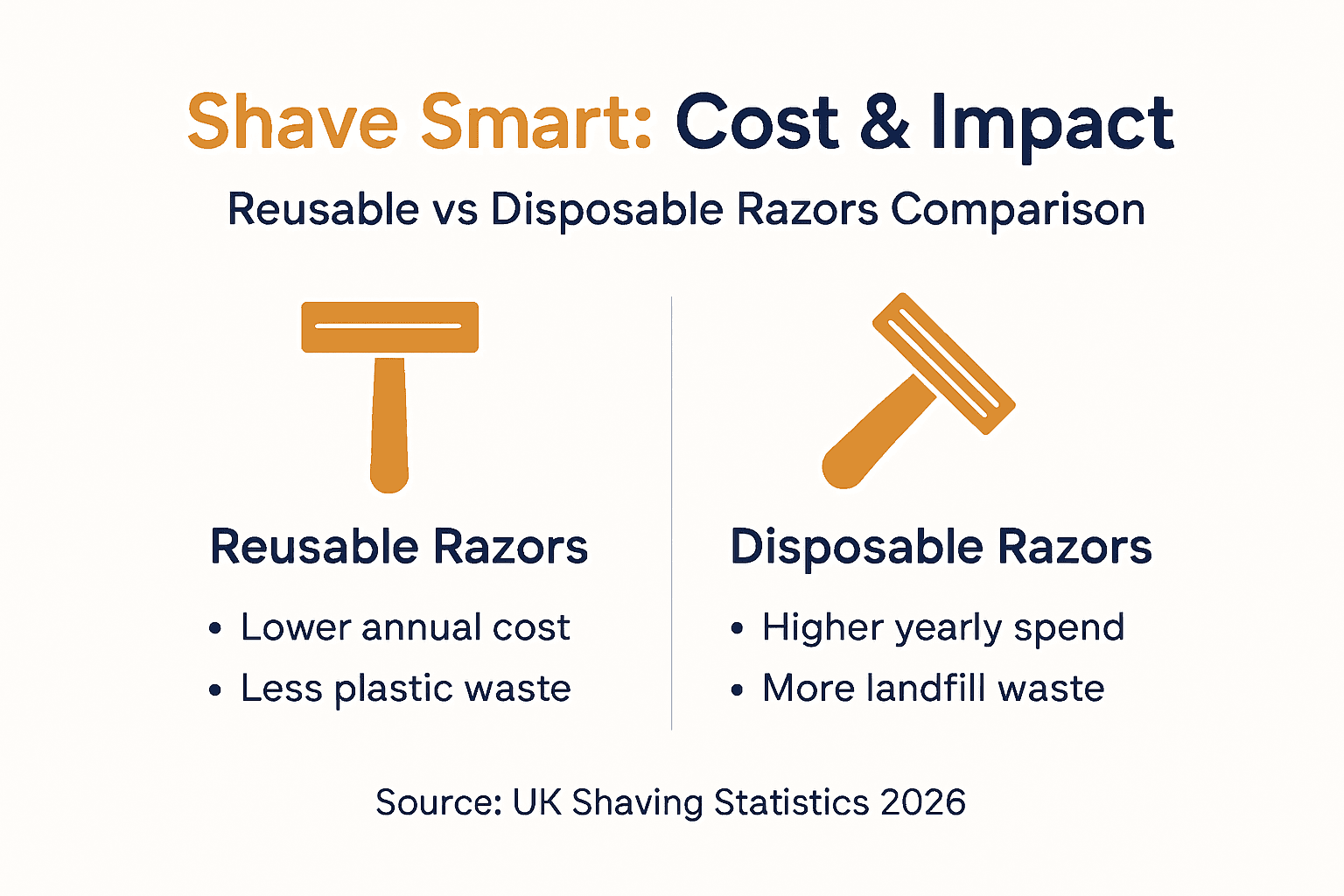
Reusable razors reduce plastic waste significantly compared to disposables; subscription models lower costs by 20 to 30% while extending blade life. Smart purchasing decisions multiply savings over time.
Reusable razors drastically cut plastic waste versus disposables. Every blade you replace instead of tossing an entire razor prevents pounds of plastic from landfills annually. UK men collectively could eliminate millions of disposable razors with simple switches.
Initial investment pays off quickly. A £40 razor with £2 blades costs £64 annually versus £80 to £100 for disposables. Subscription services amplify savings through bulk pricing and automatic delivery.
Proper razor care extends blade lifespan by up to 50%. Rinse thoroughly after use, dry completely, and store in a dry location. These habits save money while maintaining shave quality.
Annual Shaving Cost and Environmental Comparison
| Factor | Disposable Razors | Reusable Razors | Subscription Model |
|---|---|---|---|
| Annual Product Cost | £80 to £100 | £50 to £70 | £40 to £55 |
| Plastic Waste (units) | 50 to 100 razors | 0 razors, 50 blades | 0 razors, 50 blades |
| Convenience | Low, frequent purchases | Medium, occasional blade buys | High, automatic delivery |
| Long-term Savings | None | 30 to 40% vs disposables | 40 to 50% vs disposables |
These affordable eco shaving tips for UK men demonstrate how sustainability and savings align:
- Reusable razors eliminate hundreds of disposable units from landfills over their lifetime.
- Subscription models provide 20 to 30% savings through bulk pricing and reduced shipping costs.
- Proper blade care extends life by 50%, cutting replacement frequency and waste.
- Natural shaving products last longer due to concentrated formulas requiring less product per shave.
- Free UK shipping on subscriptions eliminates transport costs and reduces carbon footprint.
Environmental and economic benefits compound over years. Your shaving choices matter beyond daily comfort.
Expected Results and How to Measure Success
Realistic expectations help you stay committed to proper technique while tracking improvements.
You should notice smoother skin and less redness within your first few proper shaves. The difference becomes obvious when you stop fighting your skin and start working with it.
Irritation and razor burn reduce by up to 40% with consistent, proper technique and quality products. This improvement happens gradually as your skin adapts to gentler treatment and your technique refines.
Measure success through these indicators:
- Reduced redness and inflammation immediately after shaving compared to previous methods.
- Fewer ingrown hairs and razor bumps developing in the days following your shave.
- Longer periods between shaves without discomfort, indicating healthier skin recovery.
- Lower product costs over three to six months as reusable razors prove their value.
- Decreased plastic waste accumulation, with only small blades to dispose of monthly.
- Improved skin hydration and texture from consistent moisturizing and gentle products.
Savings from fewer blade replacements and subscription discounts accumulate noticeably over months. Track spending to see how quickly your investment pays off.
Environmental impact improves immediately. Every shave with a reusable razor prevents one disposable from landfills. This adds up to dozens annually.
Regular moisturizing compounds benefits over time. Your skin becomes more resilient, less reactive, and better protected against environmental stressors.
Give new techniques and products three to four weeks before judging results. Your skin needs time to adjust and heal from previous damage.
Discover Eco-Friendly Razors & Kits for Sensitive Skin
You now understand how proper technique and quality products transform your shaving experience. The next step involves choosing tools that match these standards.

Explore Smart Shave’s range of eco-friendly razors and shaving kits tailored for sensitive skin. These products combine sustainability with affordability, offering the precision-engineered razors and skin-soothing ingredients this guide recommends. Join thousands of UK men upgrading to less irritating, zero-waste shaving with convenient subscriptions. Learn more about how SmartShave is leading eco-friendly shaving innovation while protecting both your skin and the planet.
How to Get a Smooth Shave: Frequently Asked Questions
What shaving frequency is best for sensitive skin?
Shave every two to three days rather than daily to allow skin recovery time between sessions. This prevents cumulative irritation and gives your skin barrier time to repair itself naturally.
Can I use reusable razors if I have acne-prone skin?
Yes, reusable razors work well for acne-prone skin when kept clean and used with gentle technique. Single-blade designs reduce skin trauma compared to multi-blade cartridges that can aggravate breakouts.
How often should I replace razor blades?
Replace blades every five to seven shaves or when you notice tugging instead of smooth cutting. Dull blades cause more irritation than any other factor, so change them promptly.
Are natural shaving creams truly better for sensitive skin?
Natural creams with aloe vera and vitamin E soothe inflammation better than synthetic products containing harsh chemicals and fragrances. They create protective barriers without triggering reactions in sensitive skin.
What is the best way to travel with eco-friendly razors?
Remove the blade and pack it separately in a protective case to comply with airline regulations. Store the handle in your toiletry bag and reassemble at your destination for safe, convenient travel.