

Shaving with sensitive skin doesn’t have to mean razor burn, redness, or discomfort. Around one-third of UK men experience sensitivity during shaving, making everyday grooming frustrating. By adopting an eco-friendly, skin-soothing shaving process, you can protect your skin whilst caring for the planet. This guide walks you through every step, from choosing the right tools to mastering post-shave care, helping you achieve smooth, comfortable results without irritation.
Key takeaways
| Point | Details |
|---|---|
| Proper skin preparation | Warm water and hydration reduce irritation before you shave. |
| Eco-friendly creams with natural ingredients | Aloe vera, oat extract, and coconut oil soothe sensitive skin effectively. |
| Fewer blades minimise razor burn | Single or double-blade razors prevent tugging and skin damage. |
| Post-shave care is essential | Alcohol-free balms calm inflammation and restore hydration. |
| Sustainable practices benefit skin and planet | Eco-friendly products reduce plastic waste and chemical exposure. |
What you need before you start
Before you shave, gathering the right tools and products makes all the difference. Using a single or double-blade razor reduces skin irritation compared to multi-blade cartridge razors for sensitive skin. Sharp, replaceable blades are crucial because dull blades tug at hair and cause inflammation.
Choose natural, fragrance-free shaving creams or soaps containing aloe vera, oat extract, and coconut oil. These ingredients soothe irritation whilst creating a protective barrier. Avoid synthetic fragrances and harsh chemicals that aggravate sensitive skin.
You’ll also need access to warm water for softening hair and opening pores. A gentle exfoliation product used once or twice weekly removes dead skin cells and prevents ingrown hairs. Prepare an alcohol-free, soothing aftershave balm for post-shave recovery.
Understand your hair growth direction before you start. Mapping growth patterns helps you shave with the grain, reducing razor bumps. Maintain a shaving angle of about 30 degrees for optimal comfort and safety.
Replace blades every 5 to 7 shaves to avoid dullness and irritation. Keeping blades sharp reduces friction and protects your skin from unnecessary trauma.
Essential tools and products checklist
- Eco-friendly razors with single or double blades
- Natural shaving cream or soap with skin-soothing ingredients
- Warm water and gentle exfoliating product
- Alcohol-free aftershave balm
- Clean towel for patting skin dry
Blade replacement schedule
| Frequency | Action | Reason |
|---|---|---|
| Every 5-7 shaves | Replace blade | Maintains sharpness and reduces irritation |
| Weekly | Clean razor handle | Prevents bacteria buildup |
| Monthly | Inspect razor condition | Ensures optimal performance |
Pre-shave preparation for sensitive skin
Proper preparation transforms your shaving experience. Start by cleansing your face gently to remove dirt, oils, and impurities that can clog your razor. Use warm water to soften hair follicles and open pores, making hair easier to cut.

Dry shaving or shaving dry skin significantly increases risk of razor burn, irritation and adverse skin reactions in sensitive skin individuals. Never rush into shaving without hydrating your skin first. Spend at least two minutes letting warm water work on your face.
Exfoliation plays a vital role in preventing ingrown hairs. Exfoliating the skin 1-2 times per week removes dead skin cells preventing ingrown hairs and making shaving smoother for sensitive skin. Use a gentle scrub or exfoliating cloth, avoiding harsh abrasives that damage skin.
Follow these pre-shave routine steps to maximise comfort and reduce irritation:
- Cleanse your face with lukewarm water and a mild cleanser.
- Apply warm water to soften hair for at least two minutes.
- Exfoliate gently once or twice weekly to remove dead skin cells.
- Pat your face semi-dry, leaving slight moisture for shaving cream application.
- Apply shaving cream or soap evenly across the shaving area.
Pro tip: Shave after a warm shower when your skin is naturally hydrated and hair follicles are softened. This simple timing adjustment dramatically reduces irritation and makes shaving easier.
Choosing and using eco-friendly, skin-soothing shaving products
Selecting the right products protects your skin and the environment. Natural shaving creams containing aloe vera, oat extract, and coconut oil reduce post-shave irritation by 47% compared to synthetic chemical-based products. These natural ingredients calm inflammation whilst providing slip for smooth razor glide.
Avoid products with synthetic fragrances, parabens, sulphates, and alcohol. These harsh chemicals strip natural oils and trigger sensitivity reactions. Read ingredient labels carefully before purchasing.
Using shaving soap bars instead of aerosol shaving creams reduces environmental impact due to lack of chlorofluorocarbon emissions and less packaging waste. Soap bars also last longer, providing better value whilst minimising plastic consumption.
Concentrated natural products require less quantity per shave, reducing waste and improving skin comfort. A small amount of quality shaving soap creates rich lather that protects and soothes throughout your shave.
When selecting quality razors for sensitive skin, prioritise precision-engineered designs with replaceable blades. Sustainable razor handles made from bamboo, recycled metal, or durable plastic offer longevity and environmental benefits.
Product comparison: natural vs synthetic
| Feature | Natural products | Synthetic products |
|---|---|---|
| Irritation reduction | 47% improvement | Standard results |
| Environmental impact | Minimal plastic waste | High packaging waste |
| Ingredient safety | Plant-based, gentle | Harsh chemicals |
| Cost per shave | Lower (concentrated) | Higher (aerosols) |
Key ingredients to seek
- Aloe vera for soothing and healing
- Coconut oil for hydration and glide
- Oat extract for calming inflammation
- Shea butter for moisture retention
- Vitamin E for skin repair
Pro tip: Look for eco-friendly shaving products with minimal, recyclable packaging. Brands committed to sustainability often use higher-quality natural ingredients that benefit your skin.
The shaving technique that minimises irritation
Mastering proper technique protects sensitive skin from damage. Use a single or double-blade razor and shave with the grain to reduce razor bumps and irritation. Multi-blade razors pull and tug at hair, increasing inflammation risk.
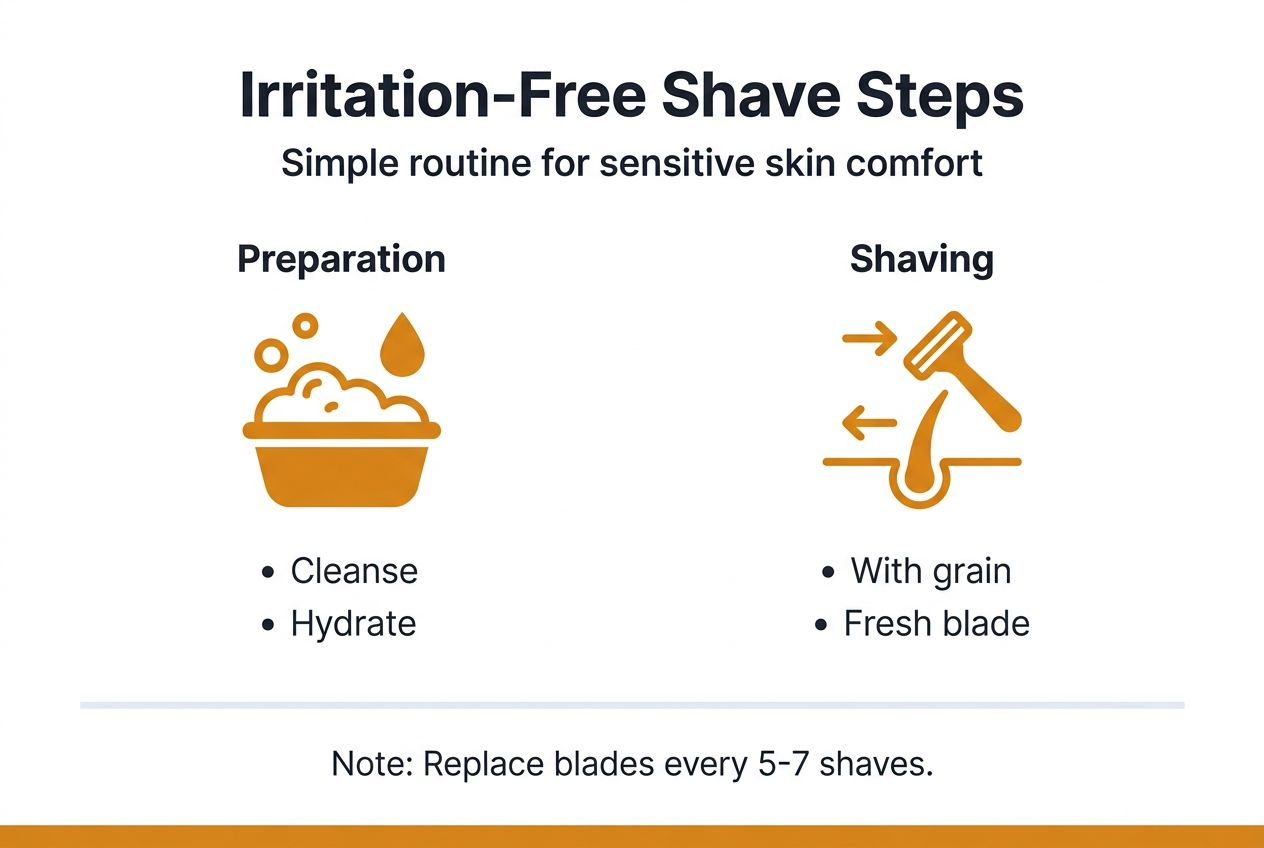
Replace blades every 5 to 7 shaves to avoid dullness and irritation. Sharp blades cut cleanly with minimal pressure, whilst dull blades require multiple passes that damage skin.
Maintain a 30-degree angle between razor and skin for optimal cutting efficiency. Too steep creates nicks, whilst too shallow requires excess pressure. Let the razor’s weight do the work rather than pressing hard.
Rinse your razor frequently during shaving to keep blades clean and effective. Clogged blades lose sharpness and drag across skin, causing irritation. A quick rinse after every few strokes maintains performance.
Follow these steps for avoiding common shaving mistakes:
- Map your hair growth direction before starting.
- Apply shaving cream liberally for maximum protection.
- Shave with the grain using light, steady strokes.
- Rinse blade after every 2-3 strokes to prevent clogging.
- Avoid going over the same area repeatedly.
- Use cold water to rinse face and close pores after shaving.
Pro tip: If you need a closer shave, reapply shaving cream and make a second pass across the grain rather than against it. This compromise delivers smoothness without the irritation of shaving against hair growth.
Post-shave care for sensitive skin
Proper aftercare completes your skin-soothing routine. Apply alcohol-free, fragrance-free aftershave balm immediately after shaving to calm inflammation and restore moisture. Your skin barrier is temporarily compromised after shaving, making hydration critical.
Post-shave balms containing aloe vera, witch hazel (non-alcoholic), allantoin, and niacinamide effectively soothe inflammation and prevent irritation. These ingredients reduce redness whilst promoting rapid skin recovery.
Avoid aftershaves containing alcohol, which burn sensitive skin and cause excessive dryness. Traditional alcohol-based splashes may feel refreshing but ultimately damage your skin barrier. Choose balms or lotions instead of splashes.
Keep skin hydrated throughout the day by drinking adequate water and using moisturiser. Protect freshly shaved skin from UV exposure with SPF if you’re heading outdoors. Sun exposure on sensitised skin increases irritation risk.
Maintain a consistent post-shave care routine to achieve long-term improvements. Regular care trains your skin to recover faster and reduces cumulative irritation.
Essential post-shave steps
- Rinse face with cold water to close pores
- Pat skin dry gently with a clean towel
- Apply alcohol-free balm within 60 seconds
- Allow balm to absorb fully before dressing
- Avoid touching or rubbing shaved areas
- Apply additional moisturiser if skin feels tight
Common mistakes and how to fix them
Recognising errors helps you achieve better results. Shaving dry skin leads to razor burn; using dull blades causes irritation; shaving against the grain causes ingrown hairs; skipping moisturising causes redness. Each mistake compounds sensitivity problems.
Shaving dry skin ranks as the most frequent error. Always hydrate with warm water and apply generous shaving cream before starting. Your skin needs moisture to protect against blade friction.
Using dull blades forces you to press harder and make multiple passes, traumatising skin. Replace blades after 5 shaves at most to maintain optimal sharpness. The cost of new blades is minimal compared to treating razor burn.
Shaving against the grain delivers closeness but creates ingrown hairs and irritation. Resist temptation and shave with the grain instead. The slight difference in smoothness isn’t worth the discomfort.
Skipping post-shave moisturising leaves skin vulnerable to redness and dryness. Apply soothing balm immediately after every shave without exception. This single step prevents most post-shave problems.
Rinsing your razor infrequently causes blade clogging and reduced sharpness. Rinse after every 2-3 strokes to maintain cutting efficiency and reduce skin trauma.
Quick fixes for common problems
- Razor burn: Apply cold compress and aloe vera gel immediately
- Ingrown hairs: Exfoliate gently and use warm compress to release trapped hairs
- Redness: Use fragrance-free moisturiser with anti-inflammatory ingredients
- Nicks: Apply pressure with clean tissue and use styptic pencil if needed
- Dryness: Increase moisturiser application frequency and drink more water
Expected outcomes and success metrics
Following this process delivers measurable improvements. Post-shave irritation and redness reduce by approximately 40 to 50% within a week of consistent application. Your skin adapts quickly when treated properly.
You’ll experience immediate smooth and comfortable skin texture following each shave. The combination of proper preparation, quality products, and correct technique eliminates most discomfort. Many men report shaving becomes enjoyable rather than dreaded.
Sustainable product use decreases plastic waste and environmental impact significantly. Switching from disposable cartridges to refillable razors and soap bars reduces your grooming footprint by over 70% annually.
Consistent sharpness and comfort are maintained by timely blade replacement. Fresh blades cut efficiently with minimal pressure, protecting your skin whilst delivering smooth results. Track your blade usage to optimise replacement timing.
Positive feedback on skin health and environmental responsibility typically appears after one month. Friends and family notice improvements in your skin appearance, whilst you feel satisfied contributing to sustainability.
Improvement timeline
| Timeframe | Expected outcome | Measurement |
|---|---|---|
| Immediately | Smooth, comfortable shave | No burning or stinging |
| 1 week | 40-50% less irritation | Reduced redness and bumps |
| 2 weeks | Improved skin texture | Softer, healthier appearance |
| 1 month | Consistent comfort | Minimal to no post-shave issues |
| 3 months | Reduced environmental impact | 70% less plastic waste |
Explore eco-friendly shaving solutions at Smart Shave
Ready to transform your shaving routine? Discover eco-friendly razors designed specifically for sensitive skin at Smart Shave. Our precision-engineered razors deliver smooth, comfortable shaves whilst protecting the environment.

Choose from complete men’s shaving kits that include natural shaving creams and alcohol-free balms formulated for sensitive skin. Join thousands of UK men who’ve reduced shaving irritation by 40% using Smart Shave products. Our sustainable approach combines skin health with environmental responsibility, giving you results you can feel good about. Browse our range today and experience the difference quality, eco-friendly grooming makes. Every product comes with free UK shipping and our satisfaction guarantee. Plus, explore our detailed guides on essential post-shave care steps to maximise your results.
Frequently asked questions
Can I use regular razors for sensitive skin?
Regular multi-blade razors often increase irritation for sensitive skin. Single or double-blade razors reduce tugging and inflammation significantly. Choose razors specifically designed for sensitive skin with sharp, replaceable blades.
How often should I replace my razor blade?
Replace blades every 5 to 7 shaves to maintain sharpness and comfort. Dull blades require more pressure and multiple passes, increasing irritation risk. Track your shave count to optimise blade replacement timing.
Is it necessary to exfoliate before shaving?
Exfoliating 1 to 2 times weekly removes dead skin cells and prevents ingrown hairs. Don’t exfoliate immediately before every shave, as this can over-sensitise skin. Schedule exfoliation on non-shaving days for best results.
What ingredients should I avoid in shaving creams?
Avoid synthetic fragrances, alcohol, parabens, sulphates, and harsh detergents. These chemicals strip natural oils and trigger sensitivity reactions. Choose natural products with aloe vera, oat extract, and coconut oil instead.
How do I prevent ingrown hairs naturally?
Shave with the grain, exfoliate regularly, and keep skin hydrated to prevent ingrown hairs. Use warm compresses before shaving to soften hair and open follicles. Avoid shaving too closely or making multiple passes over the same area.